Search the Community
Showing results for tags 'minelab equinox'.
-
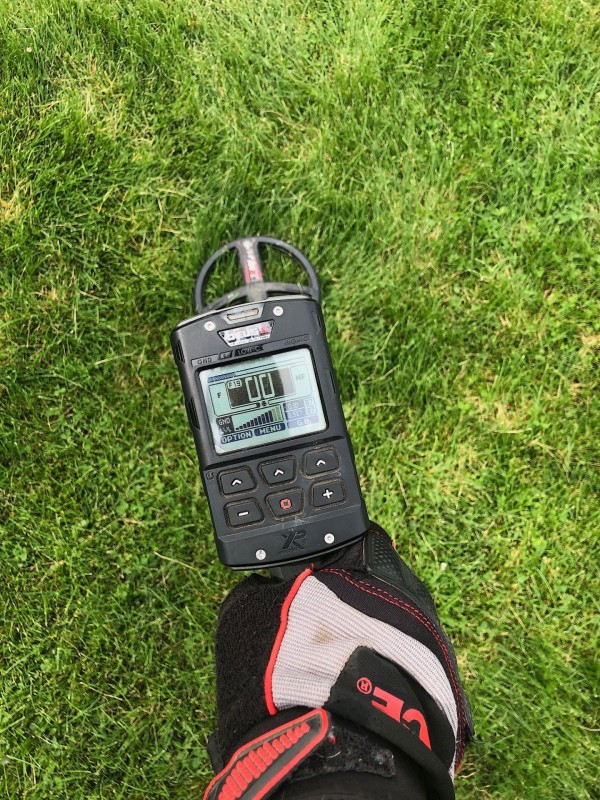
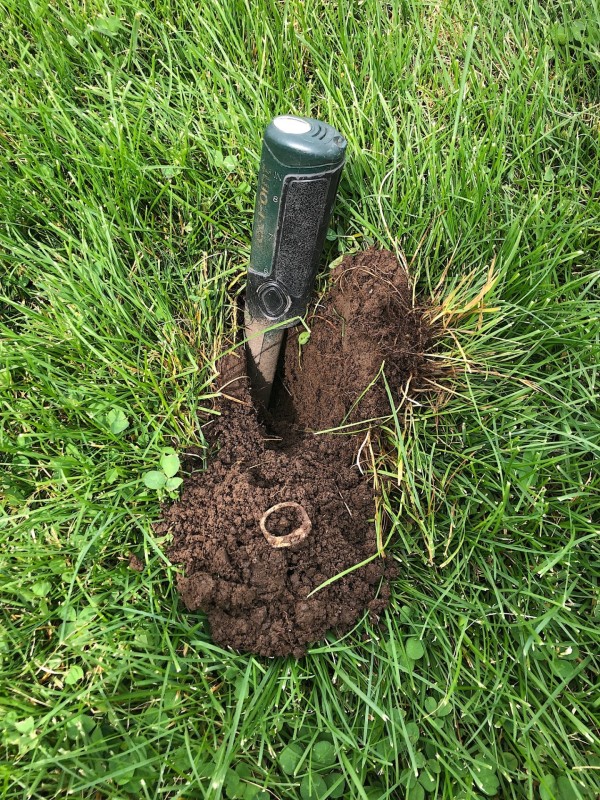
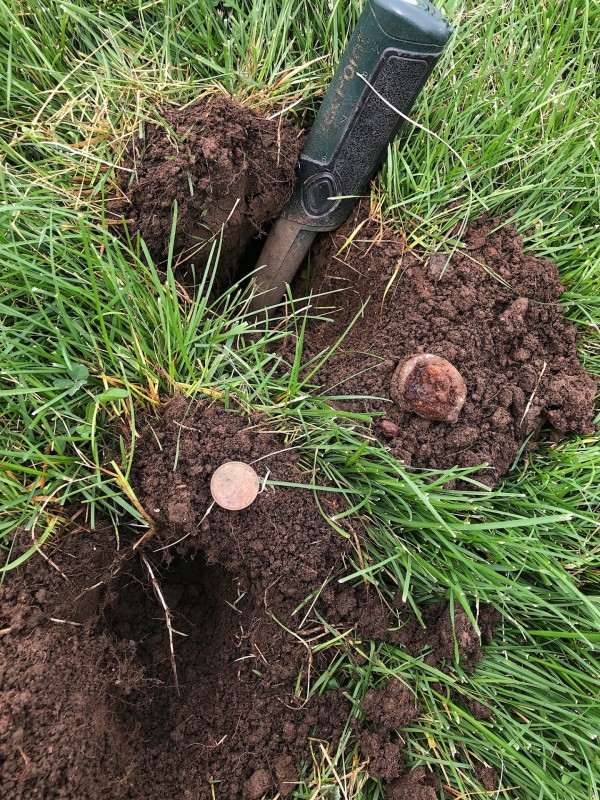
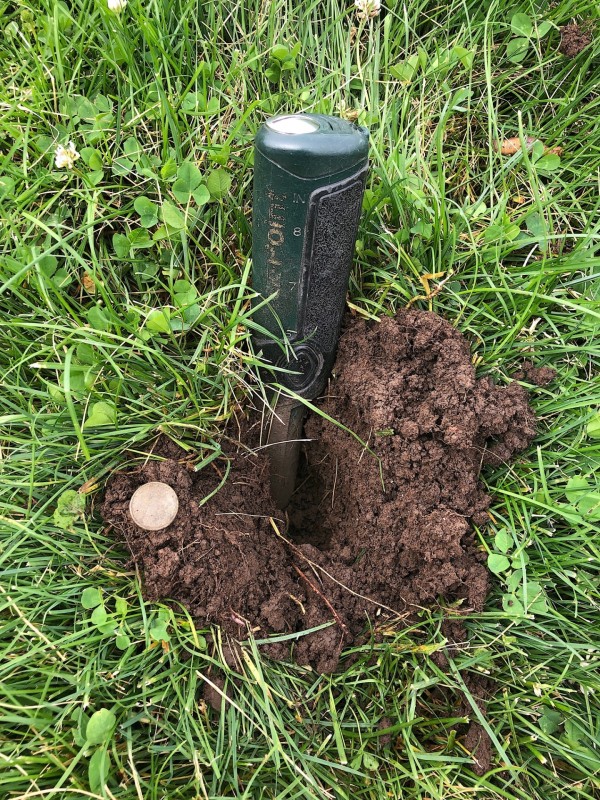
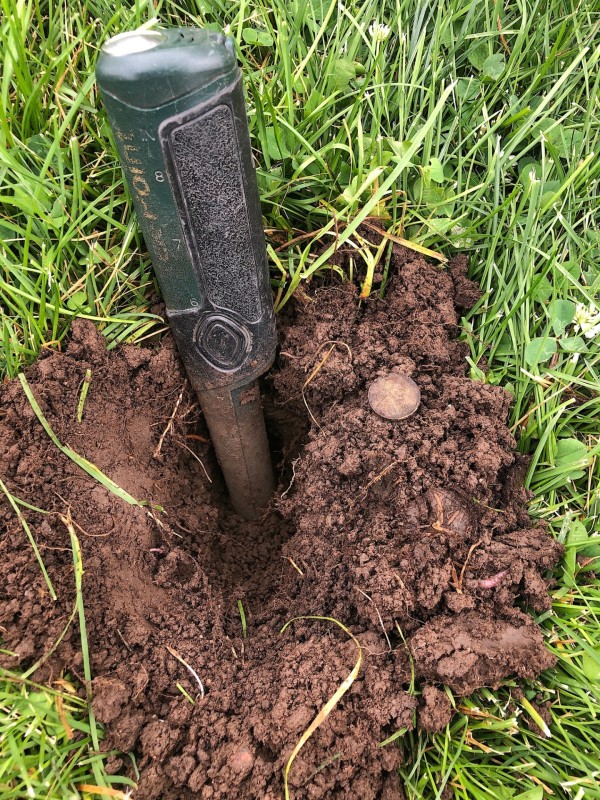
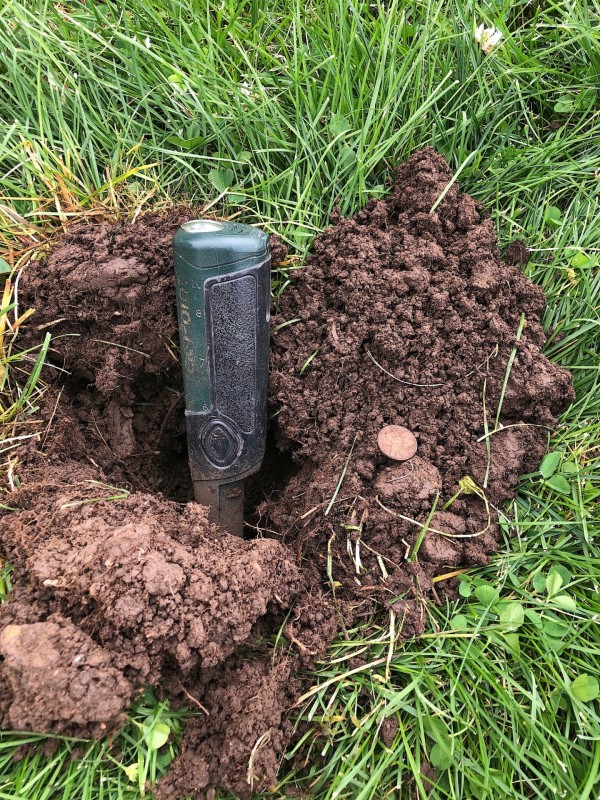
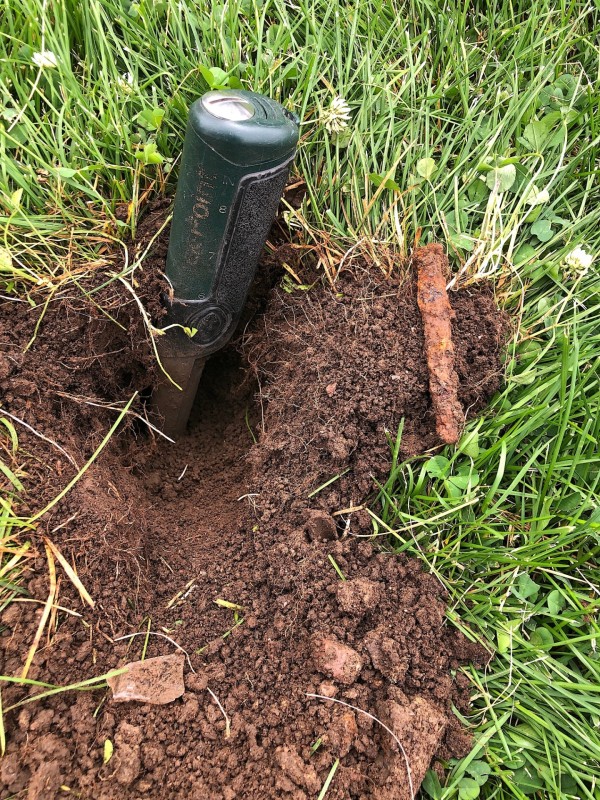
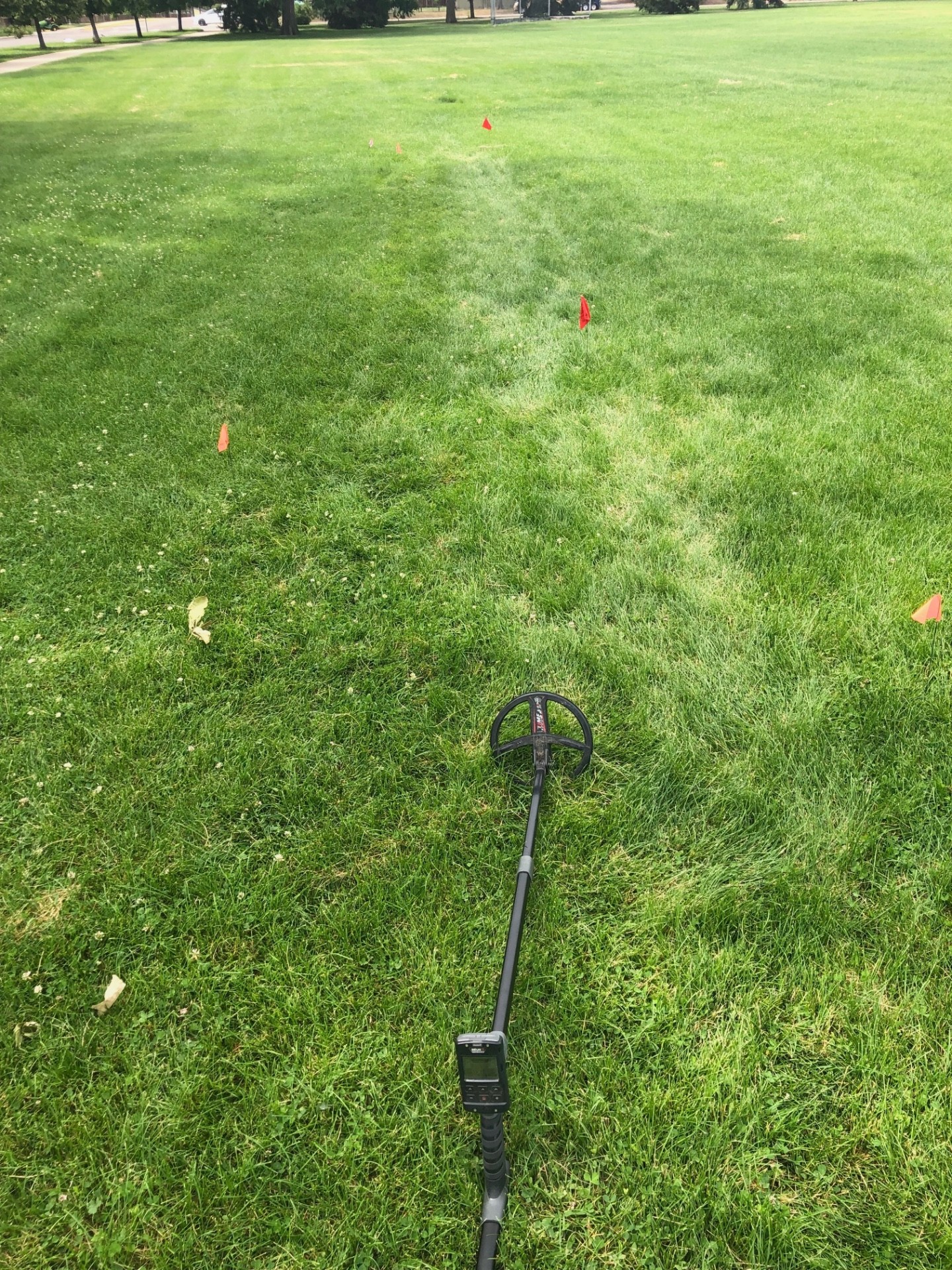
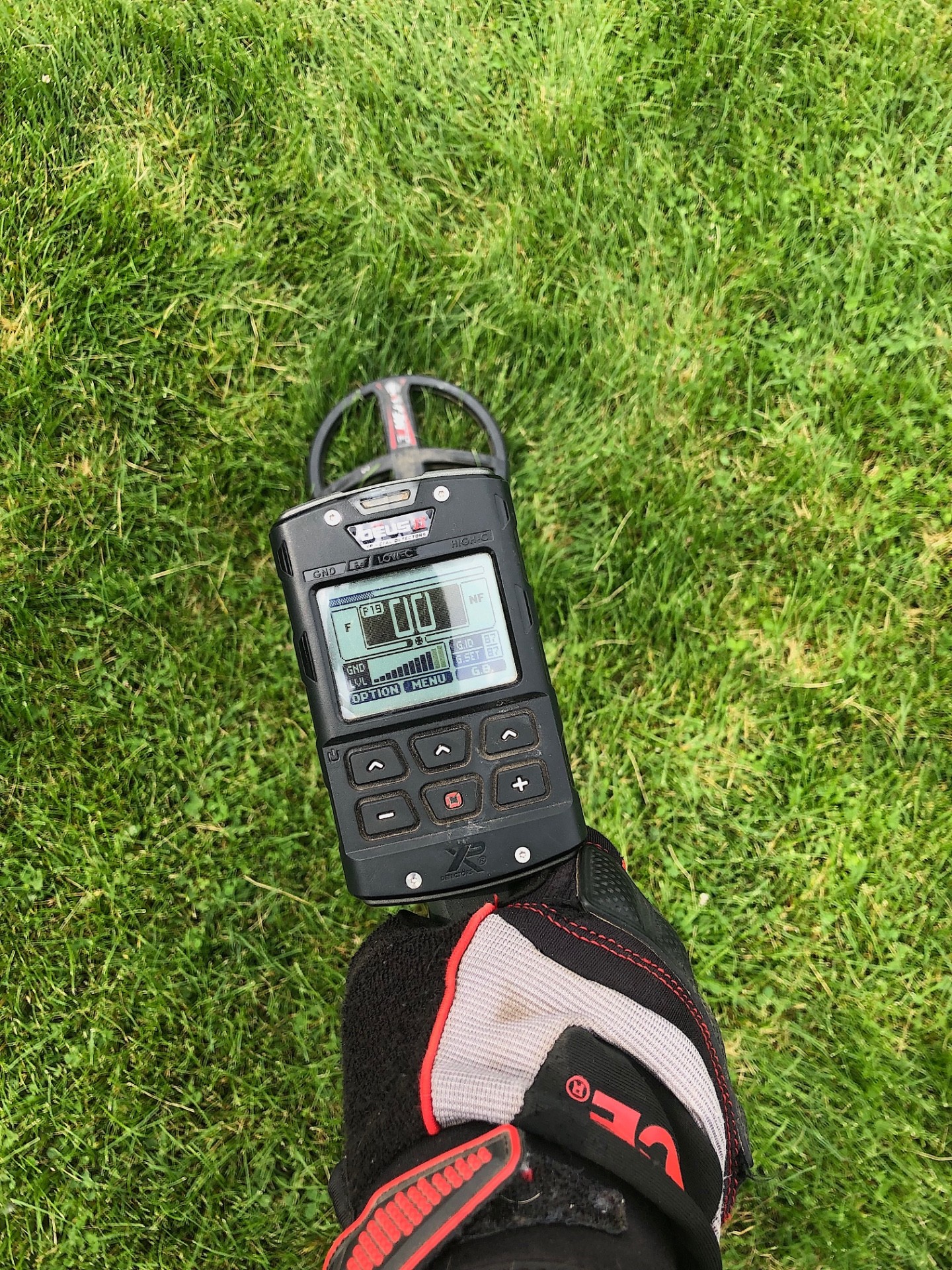
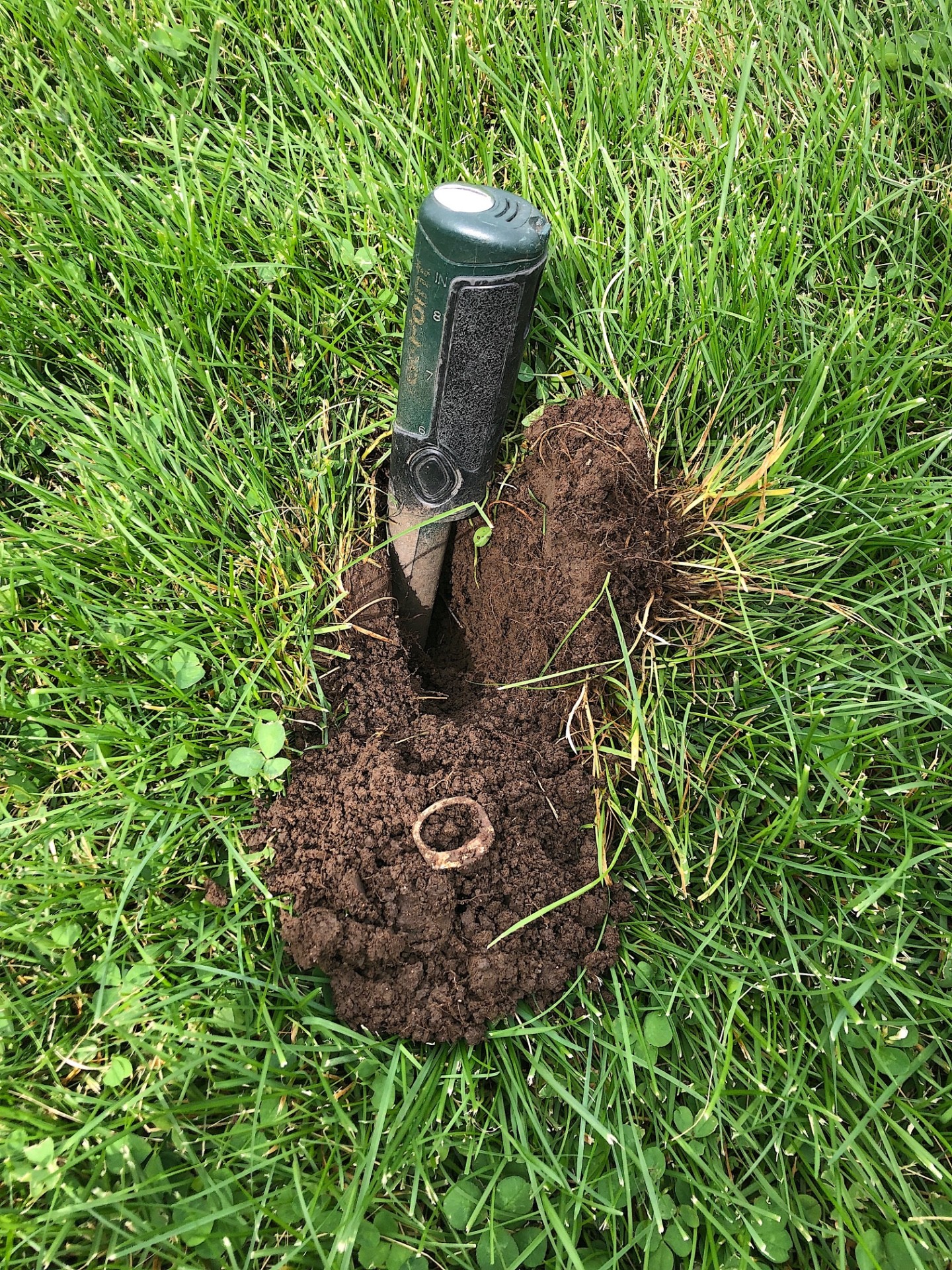
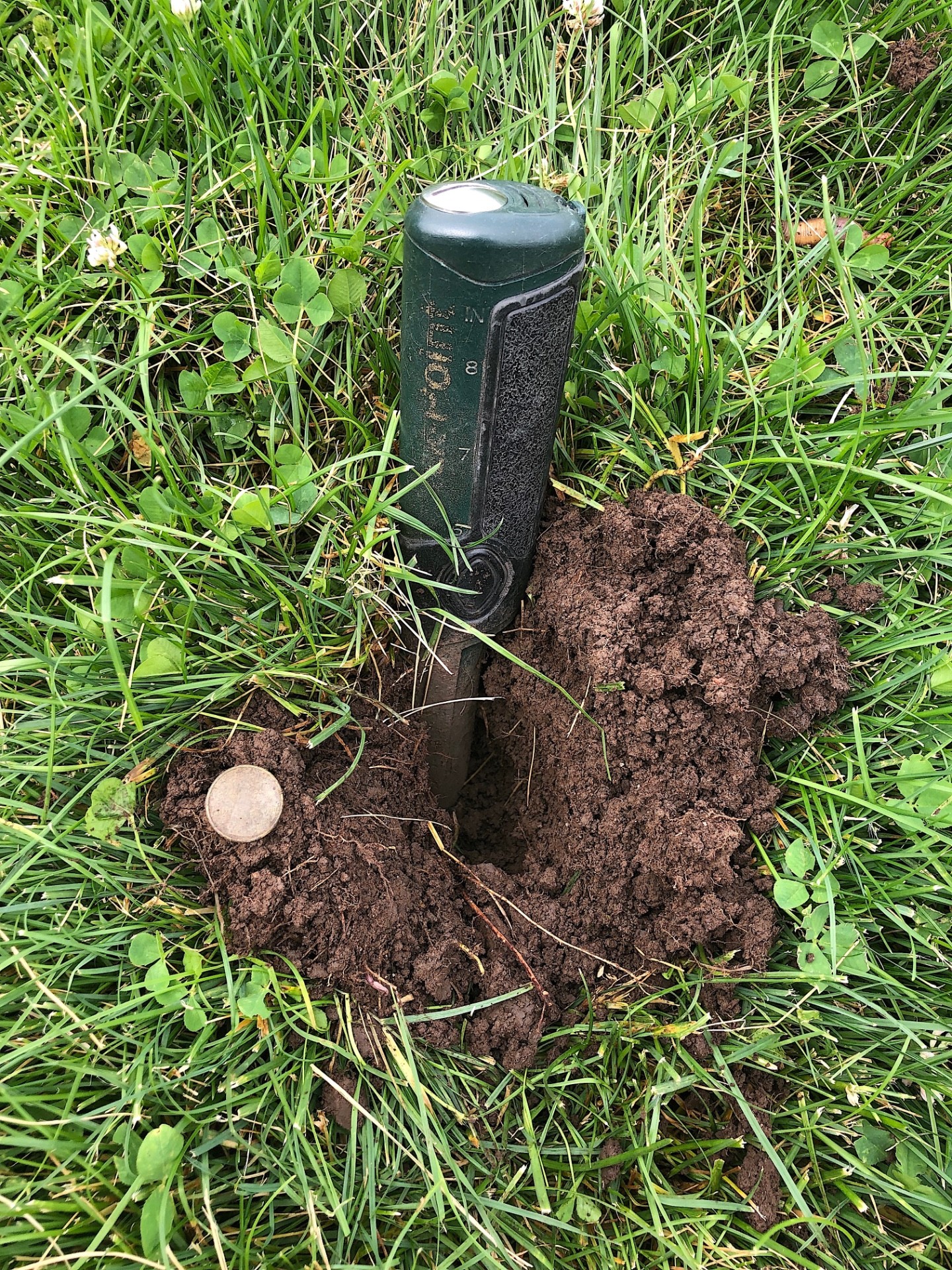
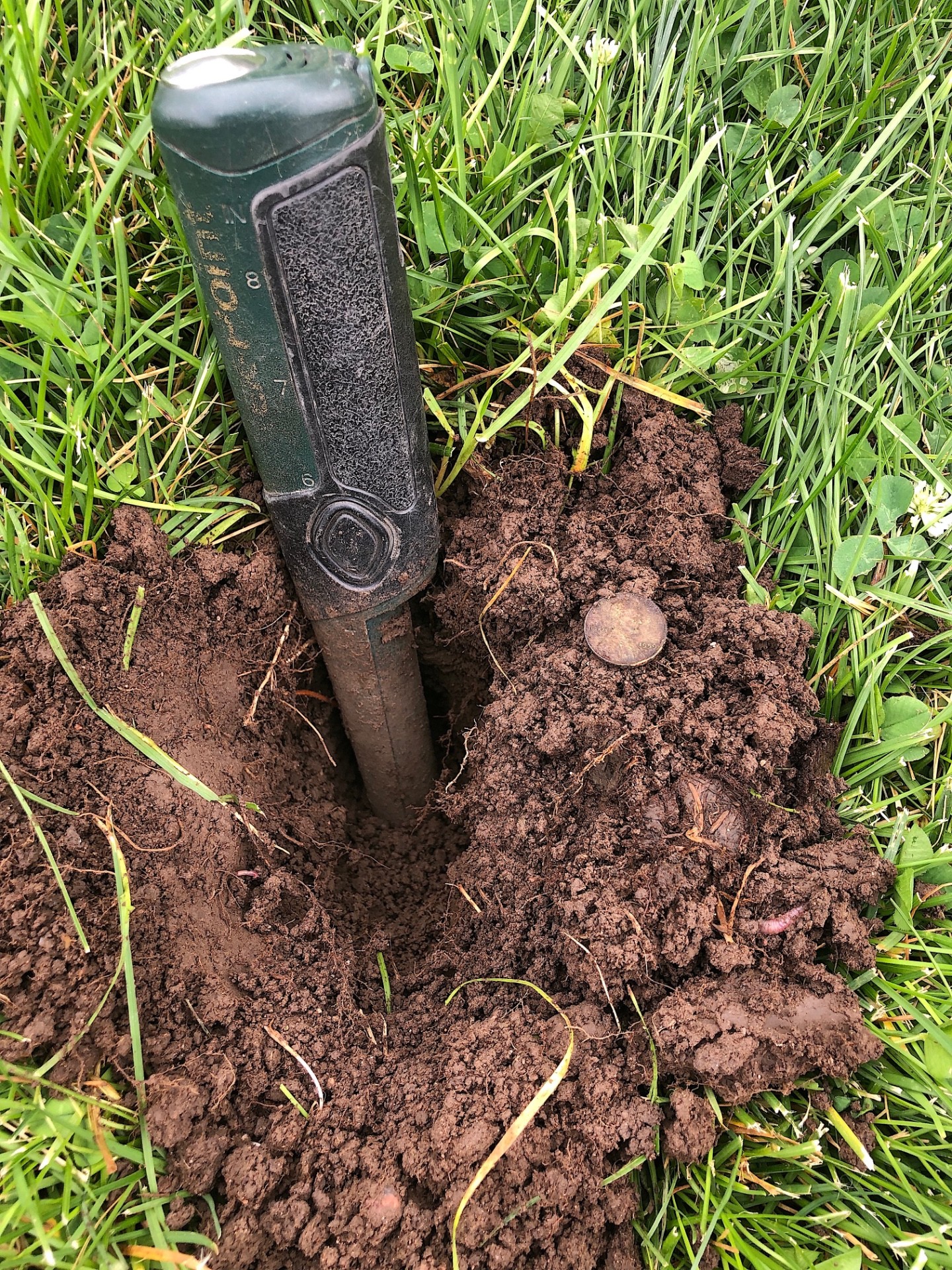
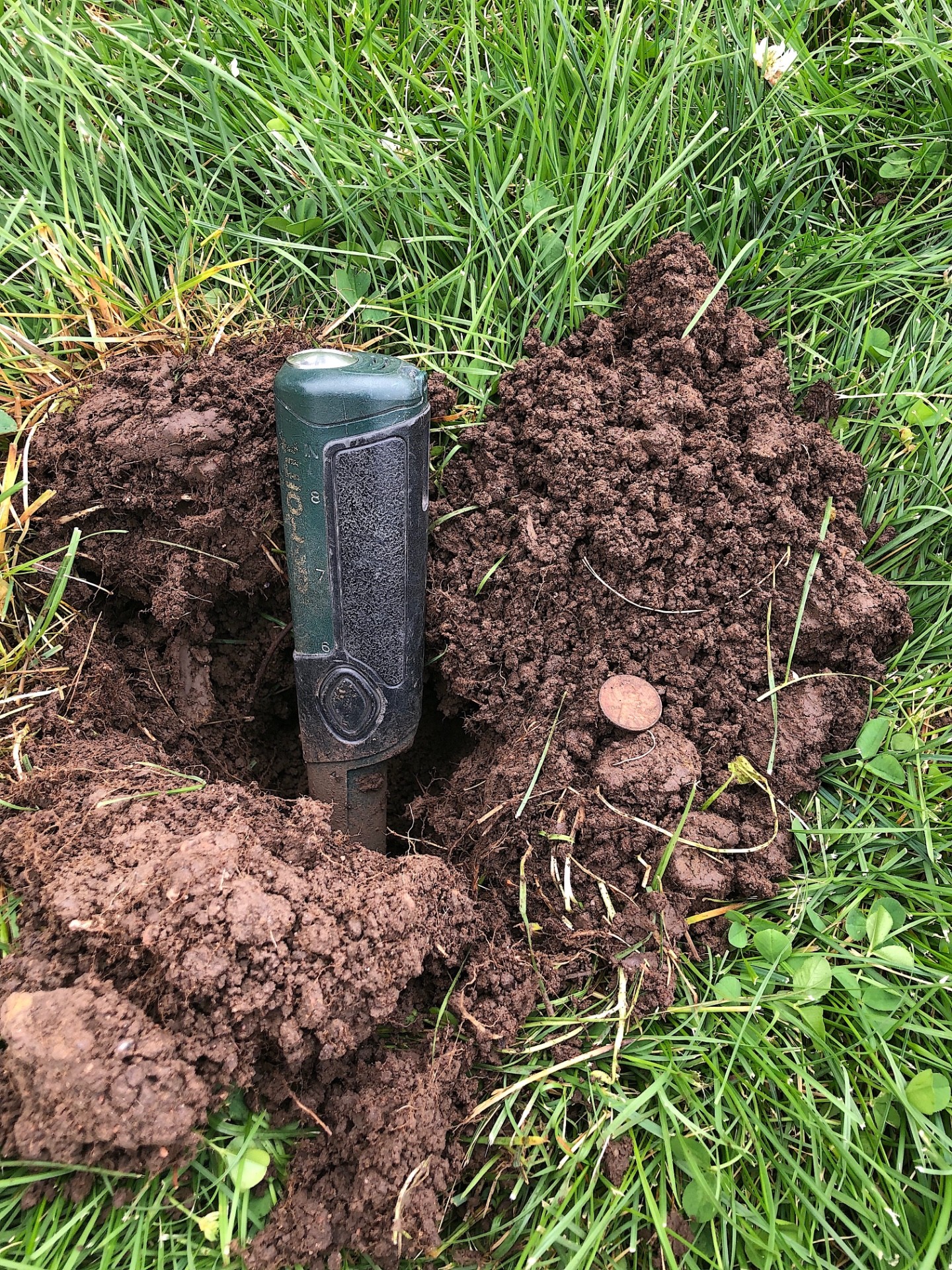
 I finally had a chance to do wild target comparison testing in a Denver Colorado area public park using Deus 2 9" coil, Legend 11" coil and Equinox 800 11" coil. Absolutely nothing is implied by doing these tests. I don't work for these detector companies and I gain nothing from doing this testing except for the knowledge it gives me. I am sharing this experience here on this forum. I am not trying to prove anything whatsoever. I liked all three detectors before the test and I still like all three detectors very much. They have many similarities and just a few basic differences at least when it concerns this test, on this day, in these ground/target conditions. So, the ground was damp, temperature was 82 F with light breeze and partly cloudy. Deus 2's mineralization graph consistently displayed 10 out of 12 bars, so highly iron mineralized ground. I chose a 30 foot by 7 foot area and flagged six targets. Actually I only had six flags but there were seven targets. Target number 2 was actually two adjacent targets. I used Deus 2 to first locate and choose these targets. Target depths below include 1" of grass/ground clearance. I chose these targets to flag because: ---they were fairly obvious deeper targets, ---there seemed to be iron, low conductor, mid conductor and high conductor non-ferrous targets included in the target selection ---all of these targets had consistent enough target IDs and tones for me to make an educated guess about what they were before digging --- all of these targets were probably coin sized and at least 6" deep which was determined by audio response, displayed depth readings and they were all out of range of my Teknetics Tek Point pinpointer set to Max which usually means 4.5". You can stop reading right here if you want. All three detectors had very similar results on these seven targets and the information they gave was remarkably consistent and accurate considering the depth of these targets and the high iron mineralization. However, before digging the flagged targets I ran all three detectors over the grid area and counted the number of targets that I determined were solid 2 way response targets. They could be ferrous, mixed ferrous or non-ferrous but they had to have repeatable 2 way responses. Size was not considered. Most were shallower than the flagged targets by their audio responses and depth readings. After the test I recovered 15 of these targets that were in the surface to 4" depth range before stopping since the grid area was starting to look really bad from my recovering 22 targets including the flagged targets. I used the Legend to recover those 15 targets. Deus 2 detected 31 targets that matched that description in the 30' by 7' area. The Legend detected 43 and the Equinox detected 54. Those were detected 2 way repeatable targets. There were many more that weren't 2 way repeatable by the way. So, this was a small area with lots of targets that could cause masking, etc.!!!!!! Settings: Deus 2, 9" coil, Detech over the ear headphones with WS6 Puck installed.......Modified Program 2 Sensitive, 5 tones, disc. 10, sens. 95, Freq. shift 3, Iron Vol. 3, Reactivity 2, Audio response 4, Bottle cap reject 1, Notch OFF, Silencer 1, Ground Balance 86 (I chose the Sensitive program because it ground balances the best in the iron mineralization present here of all the higher weighted programs with very few spurious ground responses in the Coke 23 to 25 range) Legend, 11" coil, stock Bluetooth over the ear headphones.......Park Multi 1, 6 tones, disc. 0 to 3 rejected, sens. 26, freq. shift 10, recovery speed 5, iron filter (fixed) 8, iron volume 4, no notches, ground balance 9. The Legend ground balanced easily with no issues with spurious ground responses. Equinox 800, 11" coil, Avantree Studio Pro over the ear BT headphones, Park 1 Multi, 5 tones, disc -9 to -5 rejected, sens. 22, freq. shift 8, iron volume 4, recovery speed 5, F2 iron bias 2, no notches, ground balance 2. The Equinox ground balanced easily with no issues with spurious ground responses. Target 1 6.5" deep small aluminum ring pull with just the ring....no beaver tail All three detectors detected this target correctly. Deus 2 TID 62 Legend TID 25 Equinox 800 TID 12-13 Target 2A US Jefferson Nickel 2004 Lewis and Clark "Keel Boat" and Target 2B unidentified mixed aluminum/iron target Both targets were 7" deep and they were 3" apart. All three detectors detected both targets separately and correctly. Deus 2 target 2A TID 62, target 2B TID 83-85 with iron audio responses Legend target 2A TID 26, target 2B TID 40-41 with iron audio responses (targets were too deep for Ferro Check reliability) Equinox 800 target 2A TID 12-13, target 2B TID 22-23 with iron audio responses Target 3 7" deep 1977 Lincoln Memorial copper penny All three detectors detected this target correctly and easily. Deus 2 TID 89-90 Legend TID 47-48 Equinox 800 TID 27-28 Target 4 7"deep 1959 Lincoln Memorial copper penny All three detectors detected this target correctly even though there were iron targets/responses all around it which made the exact location of this penny tough to pinpoint. Deus 2 TID 89-99, Legend TID 48-60 Equinox 800 28 to 39 Target 5 9" deep 1965 Lincoln Memorial copper penny This target was detected correctly by all three detectors even though there were iron targets/responses all around it. By far the toughest target of the test. Deus 2 TID 91-99 Legend TID 50-60 Equinox 800 TID 30-39 Target 6 8" deep 3" long late 1800s to early 1900s square nail All three detectors detected this target with mid conductor falsing and with iron responses. I guessed a very corroded zinc penny, mangled aluminum screw cap or nail before digging. Deus 2 TID 81-88 with plenty of iron responses, Legend TID 38-44 with plenty of iron responses (too deep for Ferro Check reliability) Equinox 800 TID 21-25 with plenty of iron responses. This test did teach me one really important fact. Not on a soapbox here just stating the obvious. There were many people including me that doubted the ability of Nokta Makro and XP to come up with effective simultaneous multi frequency operation that could compete with the Equinox platform. We all experienced the release of Deus 2 and the Legend and all of the turmoil and vitriol that went with those releases and with the hype both positive and negative afterwards. I will just say that in particular.......the Legend is an outstanding metal detector. Its precursor, the Simplex (I detected this park with one) simply would not have hit these flagged targets in this dirt very well if at all and certainly with very poor target ID/tone accuracy. The same goes for the original Deus 1 (also detected this park with one). So both companies have released great SMF detectors no matter what anyone says to the contrary.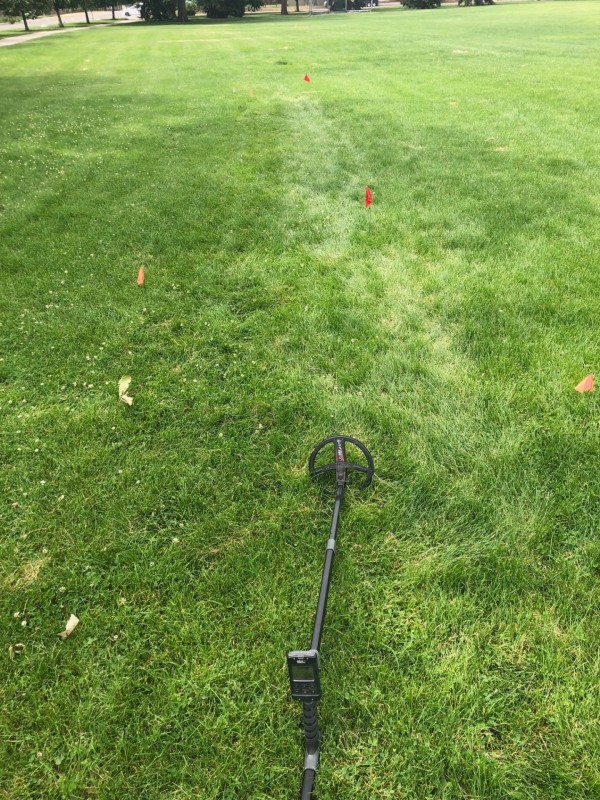
-
Hi I am fairly new to metal detecting I took the hobby up from my grandad so I went out and bought the equinox 800 metal detector in January this year and ever since I have tried to get used to it but just can't seem to get the hang of it as there is to many settings to figure out and I am just wanting a detector I can just switch on and go. I have been told the Xp Orx metal detector is a great machine for beginners I have been offered to swap my equinox 800 for the Xp Orx is it worth it as what I just said don't want to have to muck about with settings on a detector just want to beable to switch it on and go.
-
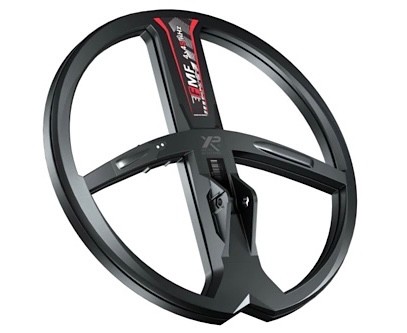
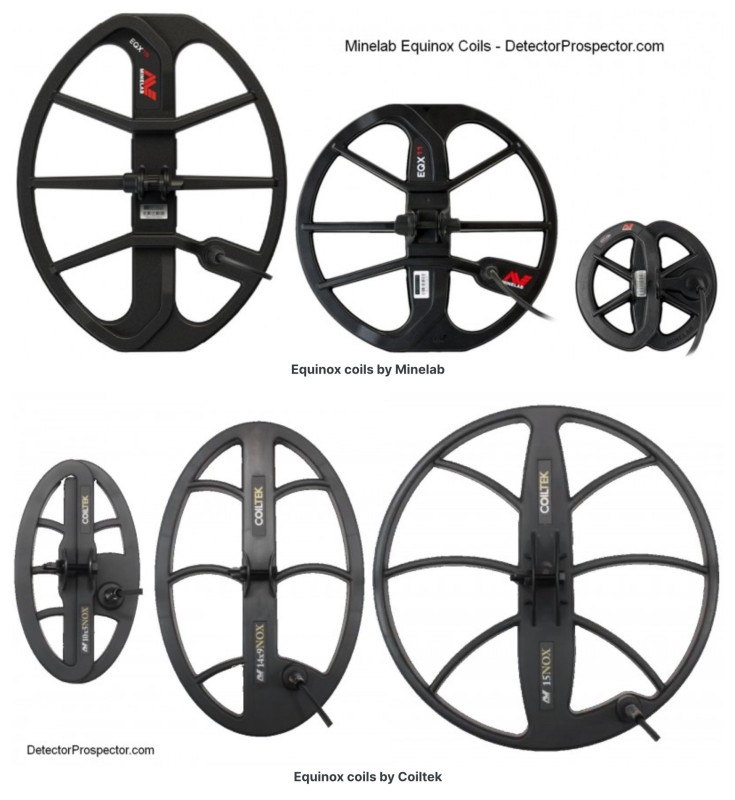
 $1600 dollar detector with these for $400 each…. Versus $1000 detector with these for $180 - $290 each…..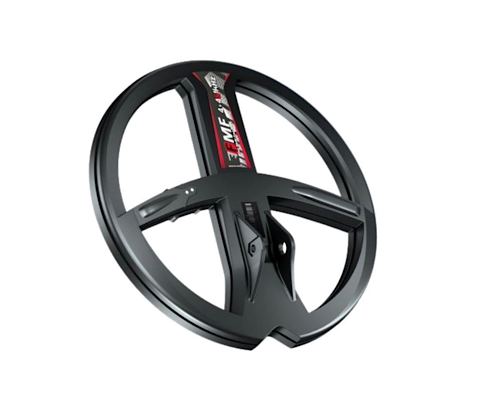
-
I have always heard on the forums Park1 is better for silver than Park2. I have also heard Park2 is better for nickels. For the longest I only used Park2 for practically every hunting situation. It just seemed to be the best all around for me. Basically though starting about a year ago I started using Park1 a lot more. In using Park1 more often it seems my old nickel finds have really fallen off. I just don't find as many. Strangely my silver finds have crept up at the same time. I don't know if it's some kind of conformation bias I'm experiencing or if it's real? I've found plenty of small silver dimes with Park2, but now I'm having my best quarter year ever using Park1 all the time. I really don't know what to think. Maybe I'm over thinking this stuff. On what I consider deeper silver dimes 7"-9" I have checked in the wild and found Park1 hit does stronger than Park2. The reason I always used Park2 mostly was because it didn't seem to false on deep iron or bent rusty nails as bad. Like when I turned on the iron it was more likely to give a iron grunt in Park2 which kept me from digging so much. As of today I'm sitting on 34 silver coins for the year which is to be honest is more like my yearly total most years. Old nickels are way down, and IHP's are down a little. Is it possible the differences in Park1 and Park2 can account for this? Every time I go out now I am faced with the dilemma of which one to use.
-
Hello! Like an idiot I went and bought The Garret AT Max! I had to the pro some time ago but an accident happened and I had to sell it! At the time Garret AT (pro gold and Max) were some the best I could afford The Deus was out of my price range and still is! But after watching all the new videos on the new technology multi frequency Im planning on getting a new one! It seems the Nokta legend is almost as good or better(build quality from what I hear any ways)) So what one would you suggest and why? I thank you all for your advice and help! I plan on hitting it hard this summer at some ghost towns and other areas!
-
Here is one of dozens of Deus 2/Nox comparisons done by this YouTube content creator. As he says it is a very interesting test. I am absolutely not trying to stir up trouble here. These videos are out there for anyone to see and you interpret them anyway you want. As an often daily modern aluminum trash/steel alloy coin and jewelry hunter AND a gold prospector using both the Equinox, Deus 1 and ORX (so no bias here) I see this test from a very different angle than the conclusions drawn by the video maker. I am a subscriber to this person's channel so I am not taking a shot at anyone here. This is just a good example of a well (I think) intentioned test that can be looked at more than one way. I see it like this: 1. I don't think I have ever used Field 2 on purpose for a coin and jewelry hunt in a modern aluminum/steel trashed park. I have used Park 2 but that is only after using Park 1 extensively at the same site beforehand. 2. This video shows very clearly why Field 2 would be (and is even on the Equinox 600) an excellent small gold prospecting mode. 3. It appears that Deus 2 Fast would not be such a good gold prospecting mode. 4. Deus 2 in Fast hits that dime really well and should do very well in modern aluminum/steel trashed areas if the trash is really small........ 5. Equinox in Field 2 multi (ignore what the video maker says and look carefully at all of the target IDs not just the ones he points out) is actually hitting ALL of the targets (at least 4 different ones including the dime). 6. Park 1 and Field 1 multi have a very different result in this test…….….by the way. Just my take on this very short video. You may see it very differently
-
I have almost 100 hours using the Legend mostly on coin and jewelry turf sites. All I can say is I am very impressed with the Legend as far as its ability to detect at a high level, its outstanding features, its SMF technology and its ergonomics/build quality. That doesn't mean my experience has been all positive and blissful. Definitely not. I have been using my Equinox 800 for the past three days since my Legend control unit is over the Atlantic Ocean right about now headed to Istanbul and a replacement is on its way to me. More on that in the future. So, I have not used my Equinox 800 since I got the Legend except for two hunts where I ran them side by side. All I can say is: the Equinox 800 is an amazing detector. Putting the Legend in the same sentence as the Equinox 800 is paying both of them a big compliment. I bought a Legend because I was a bit "detector bored", it was my birthday, I was helping my mother recover from surgery and I thought I might get a couple of hours of testing/hunting in dirt that is not nearly as nasty as where I often detect. The main reason however was that I wanted a freshwater detector that could run at high enough frequencies to gold prospect in streams, that I could trust for submerged coin/jewelry/relic detecting, that wouldn't need an antenna (I would be using it in fast moving boulder strewn water), it has a vibration feature that eliminates the need for headphones when submerged or near noisy water, no need for extra elaborate waterproofing of components and it very likely wouldn't leak and since both of my Equinox 800s were out of warranty. For my budget ($600) that meant a choice between the Legend and the Equinox 600. The choice on paper and from the Equinox leak history and lack of a vibration feature for target alerting was obvious. So after almost 100 hours, I believe I made the right choice between the Legend and the Equinox 600.
-
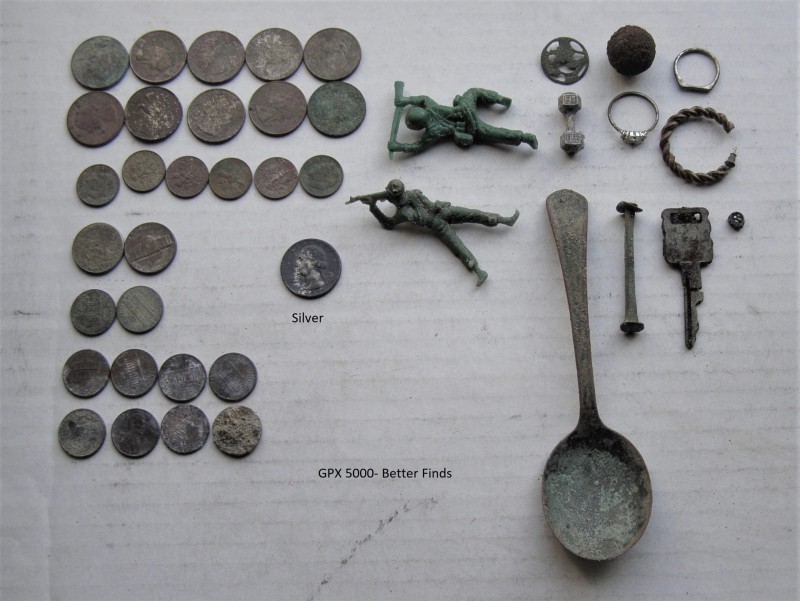
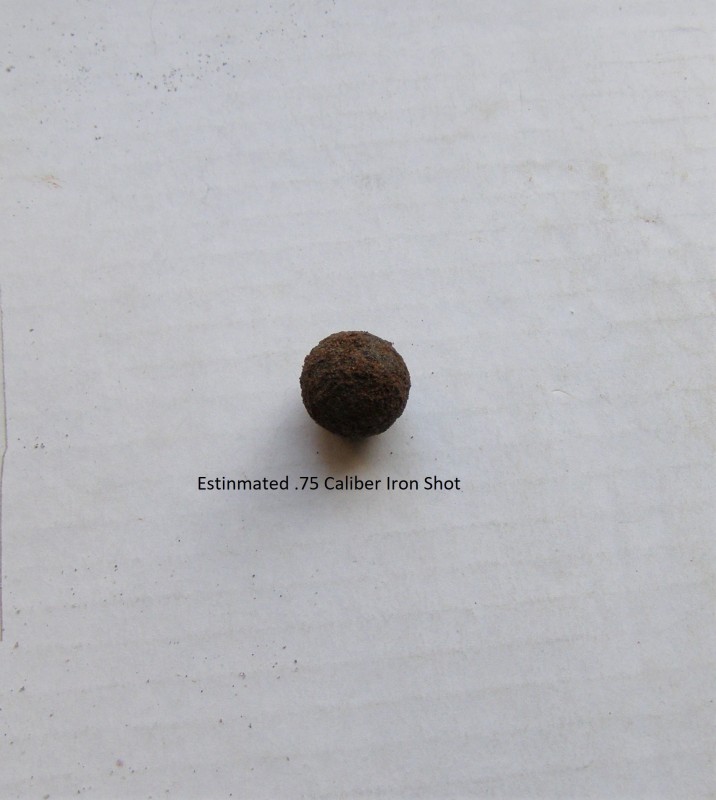
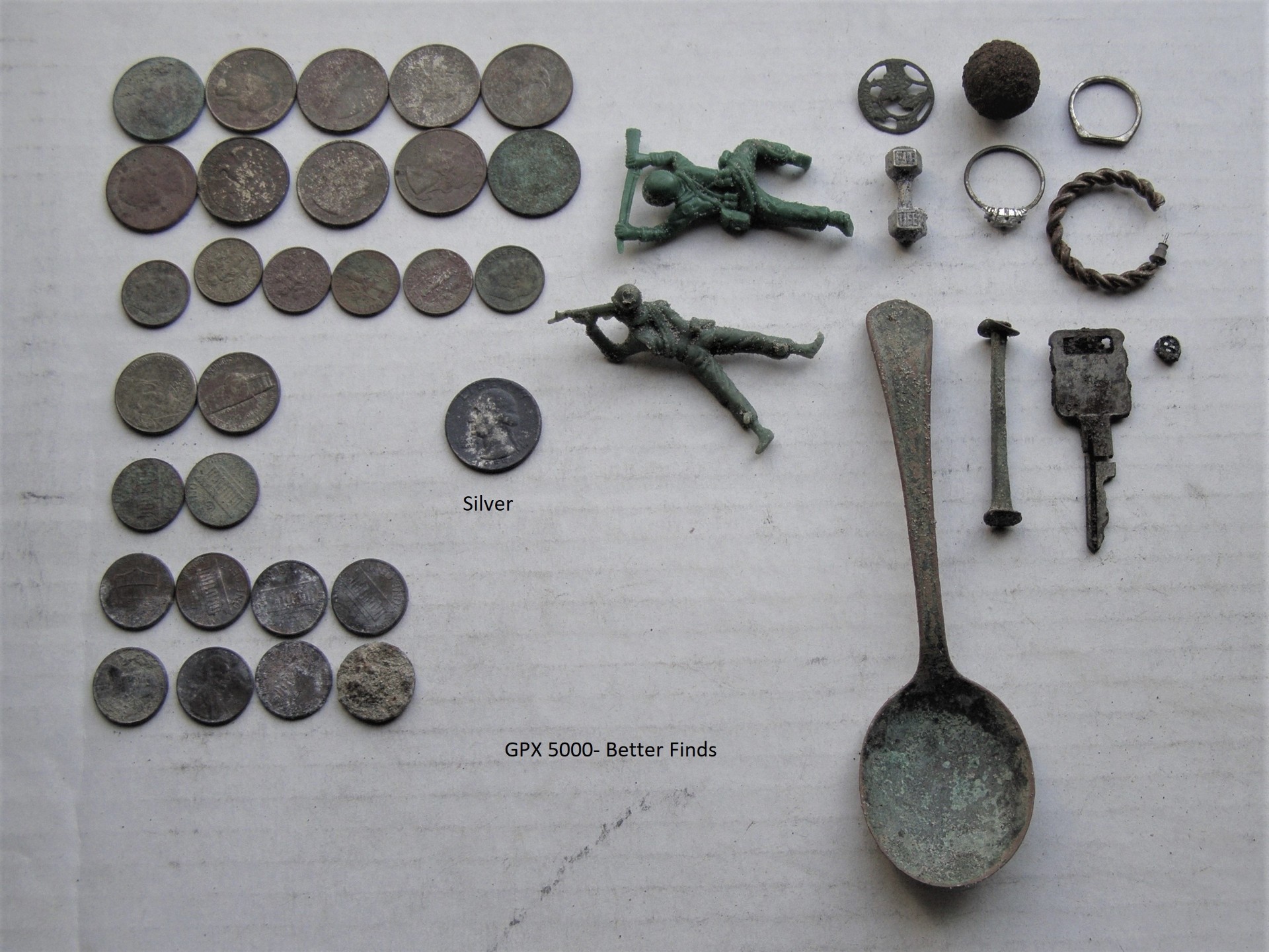
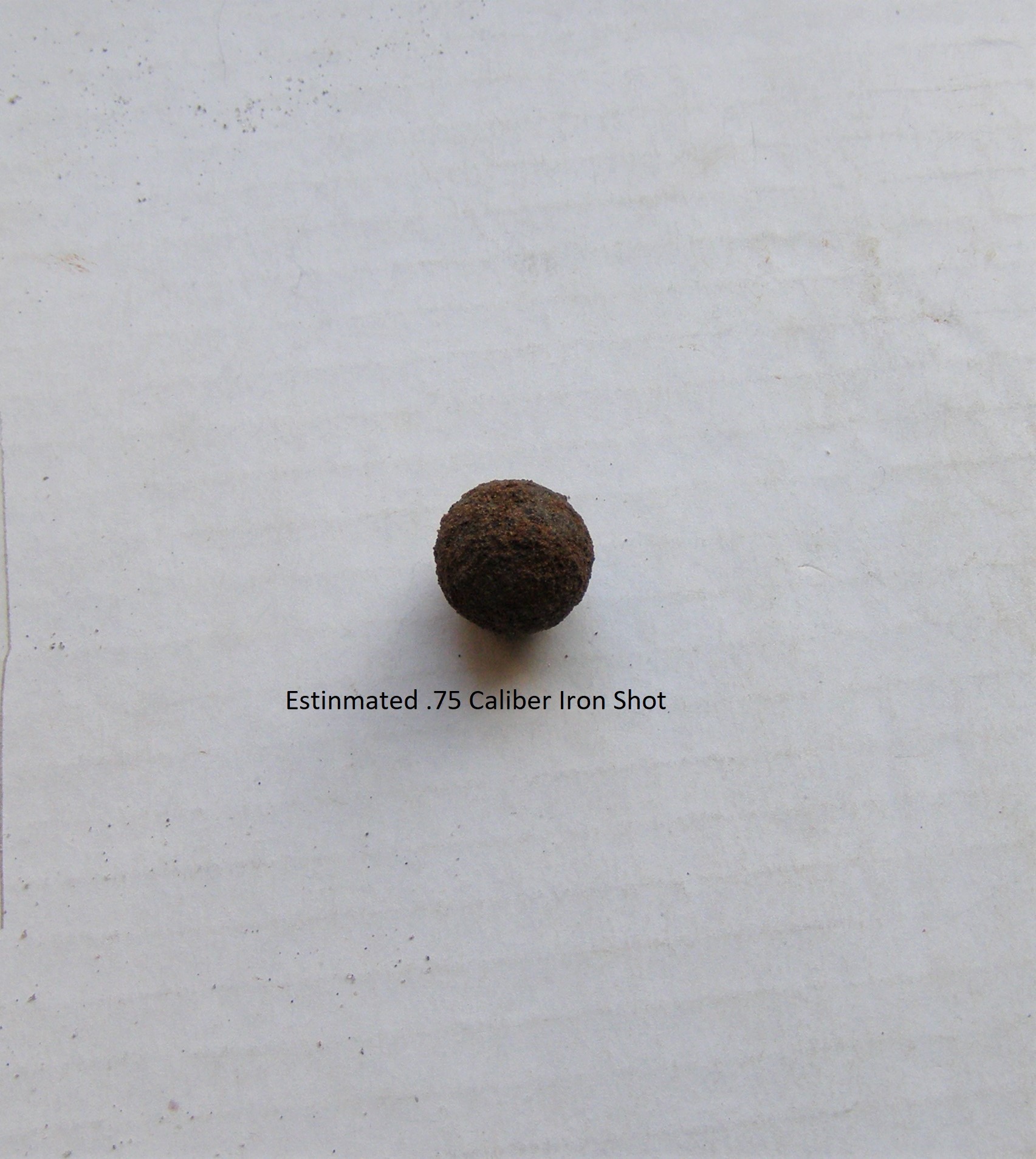
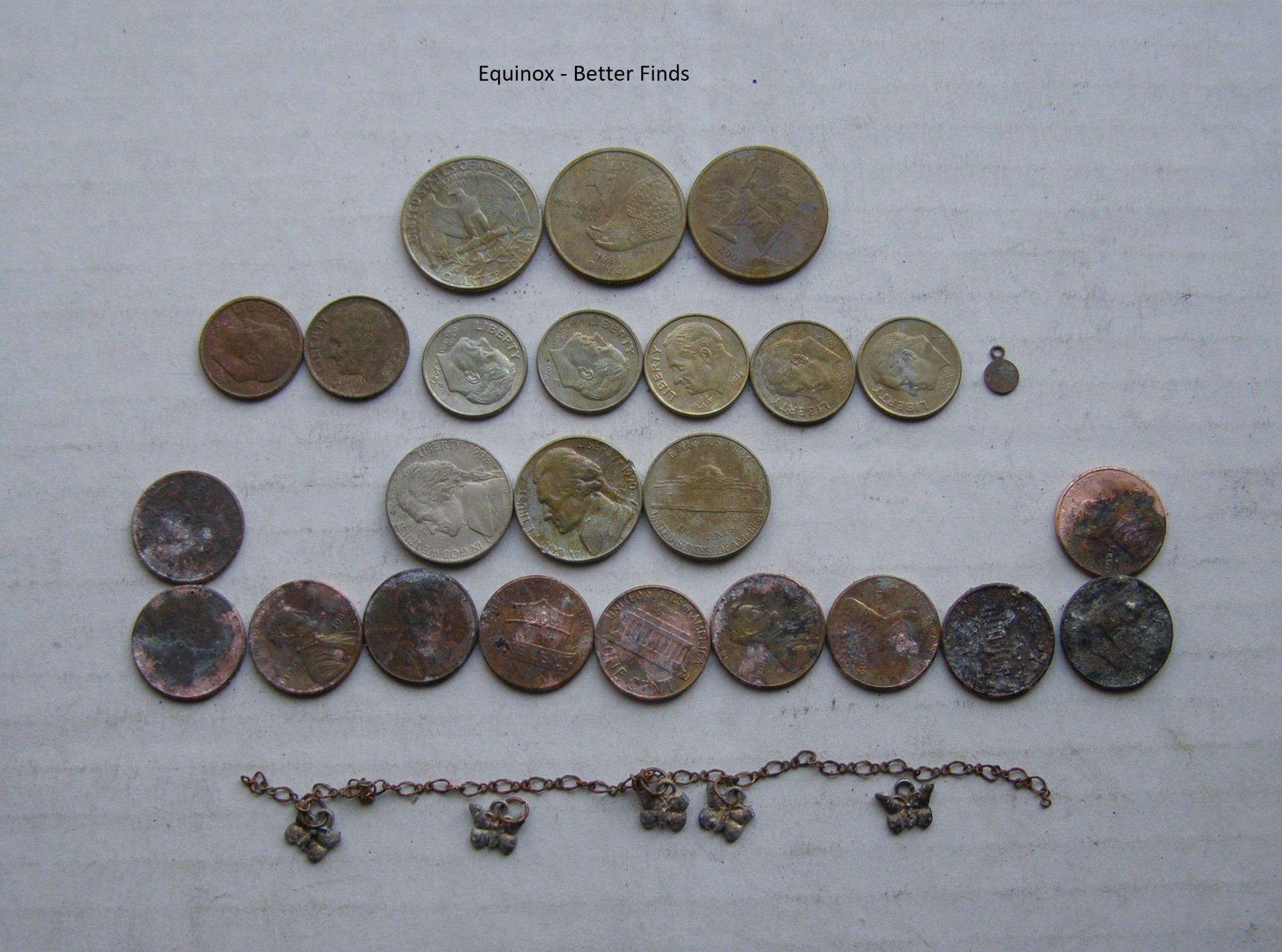
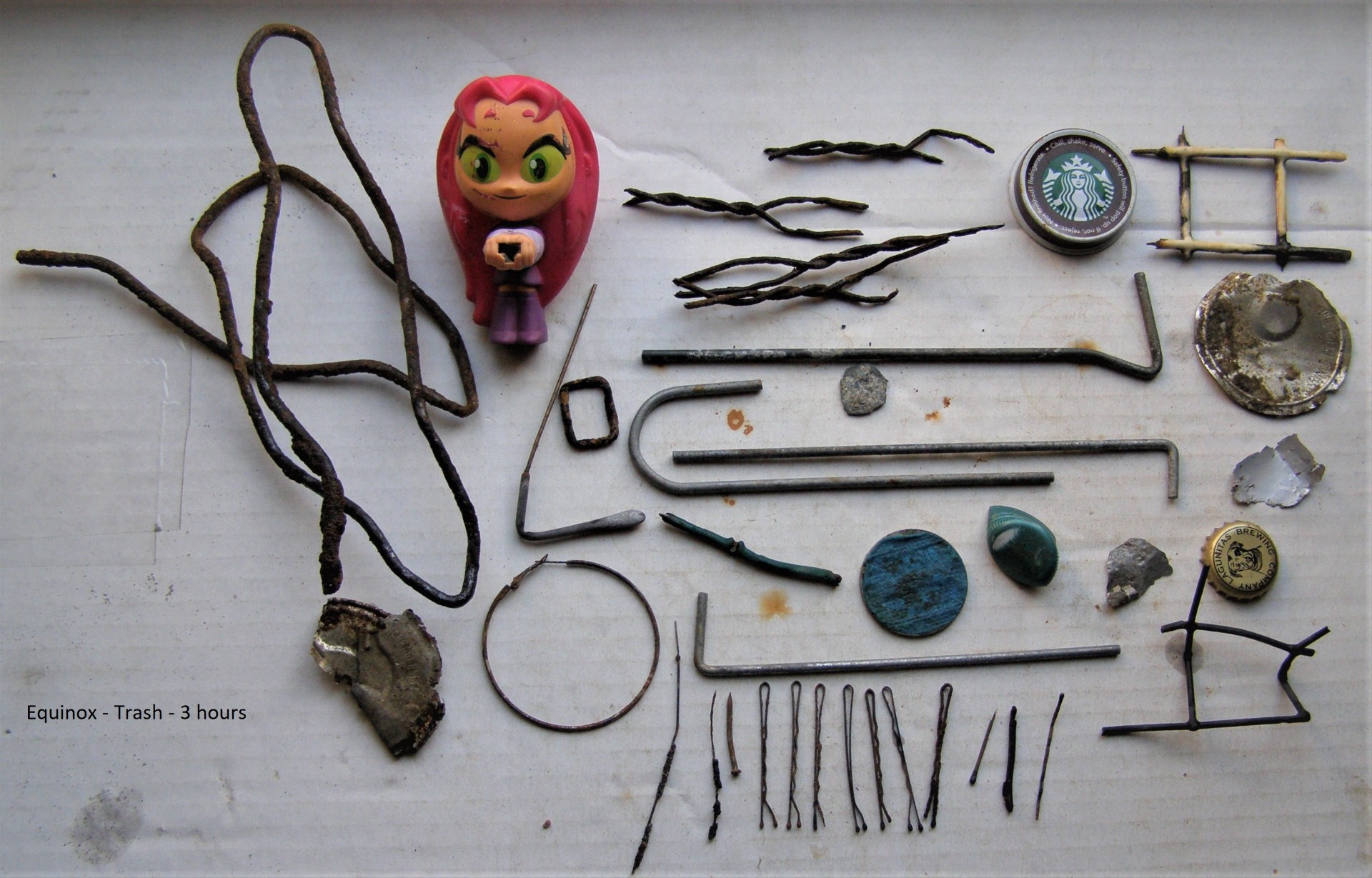
So, my beach season hunting has officially started. I was going to shoot for two days hunting but a wash out on Thursday made me change some plans. I had reserved Thursday for the GPX 6000 and the 14” DD coil, but had to settle for trying the 6000, 5000 and Equinox on Friday. I changed beach locations too and ended up at the less EMI beach for the day. Started out using the GPX 5000 for clearing out some of the recently deposited junk in an area that has produced silver before. I thought the storms that ripped through the previous day would remove some sand, but it was just the opposite…. sand deposited along 3/4 of the beach (top to bottom). Also, high tide reach to the highest point of the beach, so I could only hunt where the waves did not constantly reach up top. The 5000 did well considering the beach was really sanded in and gave me my first silver of the season – a 1955 Washington quarter. The rest was clad, but for 2 copper pennies. Some junk jewelry, and maybe some iron shot or just a ball bearing, - it measured .75 caliber. The big spoon was found at 20” and I thought I was going to get a beer can or some big iron, so that was a nice surprise. Hunted with the 5000 for 6 hours and decided I cleared enough to try the 6000 in that spot. The EMI was a bit more than usual but not really bad. I’m still not sold on that 14” coil. I tried both ground settings, as well as both Salt mode and EMI mode. I tried auto, auto +, manual (full) and manual (setting 1) and some in between. I just could not get the 6000 to not false on the sand. It was partially damp, as high tide receded a while ago, but with a sensitivity of 1, I would have expected a smooth clean machine. IDK maybe the coil is not good. I did not bring the 11” mono as I really wanted to see if the salt mode would work on the 14” DD. Being a bit disappointed, and after trying all combinations of settings, I called it after around 10 minutes. So, the tide was getting as low as it was going to be, so I hunted for 3 hours with the Equinox and traded my spade for my scoop. I didn’t use the Nox much last season as the 5000 was killing the silver, so the Nox sat idle. But I wanted to see if the heavy waves dropped anything on the beach along with all that sand. There weren’t many targets, so I dug everything to get a feel for all the numbers. The hairpins and tiny wire all read a steady -2, -3. The Nox did well for the short time I used it and if I wasn’t beat from the hunt, I would have stayed in the area that was producing some coins. It was the best machine for the day to give me a chance at some gold. It felt really, really good to get out and just walk the beach. Next week all 3 machines will be at the crazy EMI beach. I will have the mono coin and the DD to see if this beach (dry sand) will be ok for the 14” coil. Can’t wait!!!
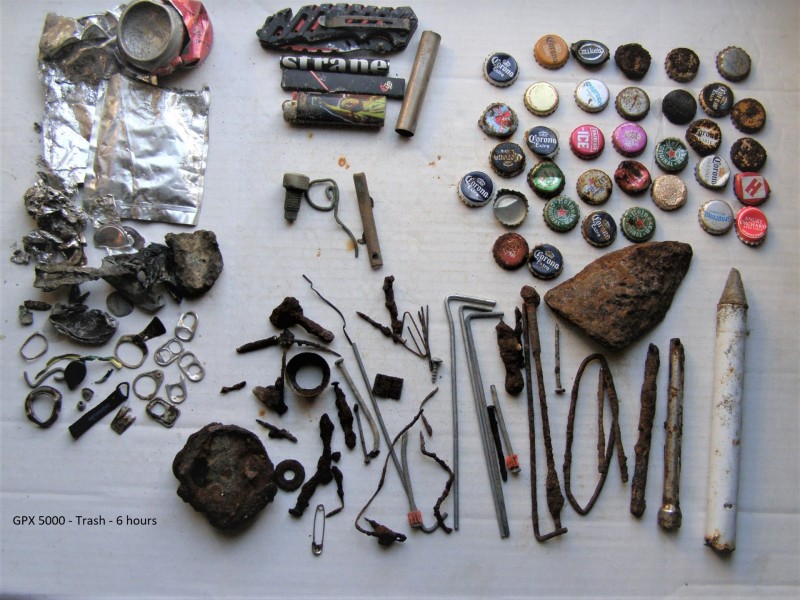
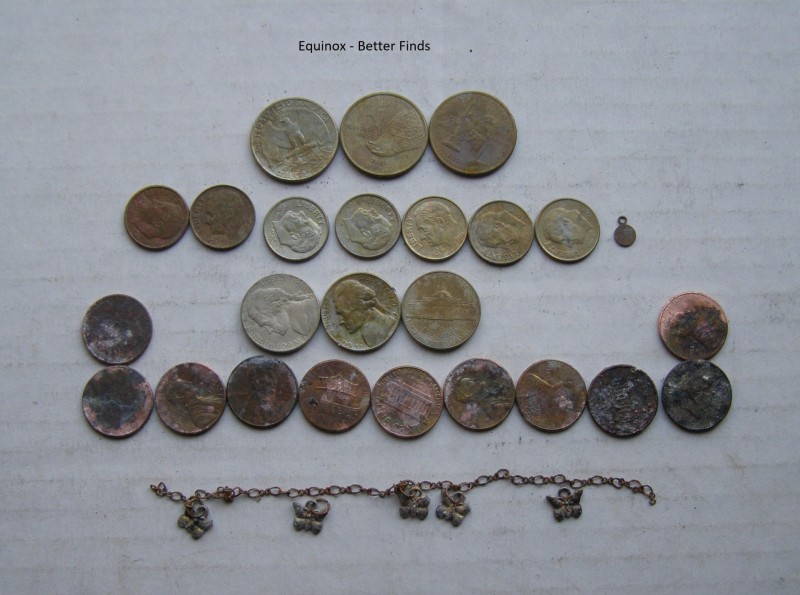
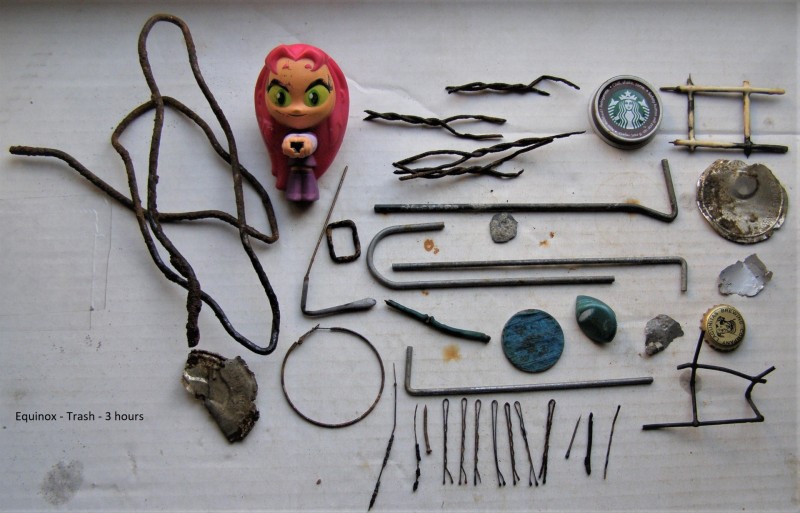
-
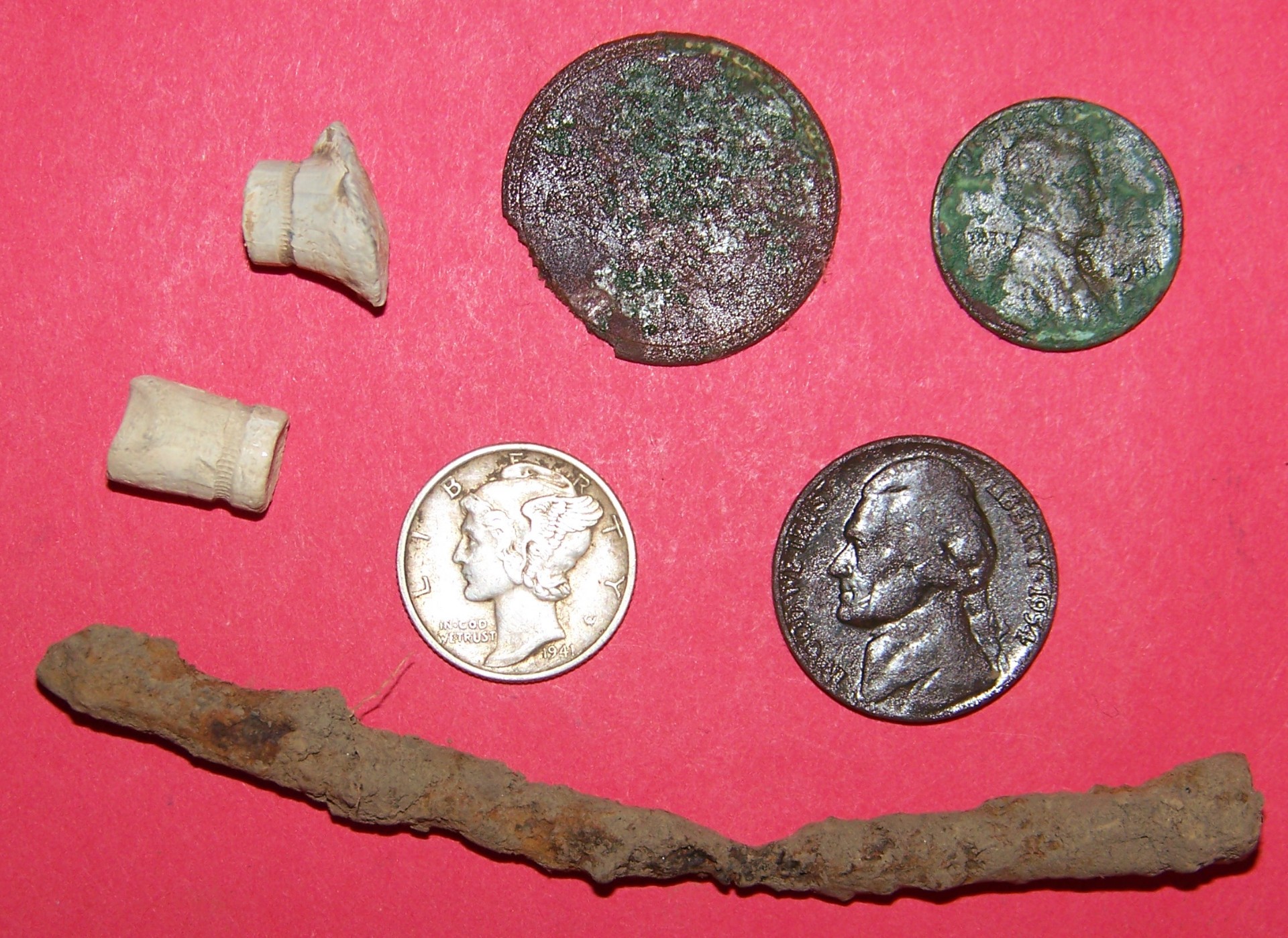
 It's been a slow year, partly due to the weather, partly due to checking out detector+coil combos in trashy (multiply hunted) test sites, and partly due to lack of available promising old sites. So far in 2022 I've researched three possible new sites. From the first of these I've shown some results (silver Roosie dime, Buffalo nickel, Wartime nickel) but it's getting tougher there. That muni park site suffers from my most annoying nemesis -- reworking/backfilling 'improvements' which bury most of the goodies previous detectorists failed to get. I'm sure there are a few Wheaties and other coins from the first 65 years of the 20th Century (e.g. silver) but with good weather here I expect it to get a lot more visitors, particularly around the sports fields which are most of my remaining, promising ground. Last weekend I discovered what looked to be a very good and possibly unsearched homestead (now public property) for which early 20th Century USGS topos showed a couple buildings that disappeared in the 1950's. I headed out there Tuesday, grabbed my detecting gear, and on the (walking) way noticed a sign at the pedestrian entrance so checked it out. There in plain letters were the dreaded "no metal detectors." In their defense the site is exclusively wooded trails with one meadow so I understand they don't want digging to disturb the flora. I was close to another site I've hunted quite a bit (with only moderate results, mostly Wheaties and one silver Warnick) so off I go. In 3 hours of detecting, not surprisingly I found no old coins but instead about a dozen copper strips (sounding good in the quarter - half dollar VDI region) that had been used as flashing from a slate roof of a large residential building torn down in the mid-60's. A few modern coin crumbs but no oldies. Wednesday I had a two part plan -- go to my 2021 best site (what I called the "Wheatfield" due to the number of Wheat cents I've found there), figuring if the grass had been mown I could mop up on one rather lightly frequented (nowadays), quite shaded, sloped area that previous partial coverage had produced a couple Wheaties. If unmown I had another park (plan 2) not terribly far away I wanted to re-search with a small coil to get between the pulltabs around picnic tables. Interestingly the plan 1 section A was the only part of this plan 1 park which hadn't been mowed. Hmmm. I've seen this before -- areas that are lightly used are returned "to nature" never to be mowed again. I figured this might be my last chance so even with some scattered thick grass I went to work. Right off the bat the EMI was bad and after fiddling with different multifrequency modes and settings I settled into (ML Equinox 800 settings of) recovery speed = 4, 10 kHz in Park 2, which was the quietest I could find, allowing me to run gain in the 20-22 range. I had 3 hours to hunt and spent the first 1:45 here, with a couple small successes -- 1944 Wheat cent plus a thin brass trade token that had a large '1 centsign' in the middle and a merchant's name around the rim. (Below I post photos of these and other relevent finds.) The token hit in the aluminum screwcap zone (21-23 on the Equinox). Both of these finds were in the 5" depth range and less than 2 meters (6 1/2 feet) apart. I eventually moved on to section B which was an open, flatter area but also unmown. EMI was quiet now so back to my standard park 1, MultiFrequency, gain = 22-23, Iron Bias F2 = 0, keeping recovery speed at 4. In the first 10 minutes in the 4"-5" depth range I found two fired lead bullets, both white (oxidation with age?) and both measuring 0.30-0.31 inch diameter (caliber), only about a meter apart. My typical assumption when I find bullets and/or casings in parks is that these were dropped or fired by hunters prior to the land becoming a park. I think that is likely here - so first half of 20th Century or earlier. After 45 minutes I wasn't finding any more goodies so with 30 minutes remaining I headed towards section C which was on my way back to the vehicle. This section fortunately was mown but unfortunately it's close to a picnic shelter meaning I had to get ready for trash, especially pulltabs which can masquerade as USA 5 cent 'nickels'. I have developed a standard technique when hunting parks and schools in my area. If the Equinox's signal strength meter (misnamed 'depth meter') shows 4 or more bars (more bars is deeper) and the VDI is anywhere close to a nickel (12-13 being the sweetspot) then I'm digging it. If signal strength is less than 3 bars I have an investigation method using Field 2, recovery speed = 6 that identifies most beavertail only (ring missing) pulltabs. The modern racetrack tabs, when shallow, typically flash some 14 in Park 1. However, 4 bar or weaker signal strength nickels will flash some 11 and 14 in Park 1, and my investigation method using Field 2 fails with deeper targets. (BTW, if 3 bar signal strength I use my judgement on the dig/ no dig decision, deepending upon what's been showing up and/or how fatigued I am.) Approximately 15 minutes into my last 30 minutes I get a mostly 12-13 signal with some 11 and 14 thrown in, and it's varying between 3 and 4 bars. Diggable. At about 5 inches out comes a Jeffie (won't read the date until I get home), which is promising. Finally, with 5 minutes before I turn into a pumpkin I get what appears to be a deep Zincoln: 19, 20, 21 VDI but a 4 bar signal strength. Maybe it's a deep Zincoln -- those do occur especially if the ground has been reworked, but since these annoying junk coins have been around for 40 years now, if they haven't self-destructed from galvanic action they can be naturally deep. I figured about 80% I had a Zincoln and 2% an Indian Head (I had found one last year about 20 meters away) with the remaining 18% 'other' and likely trash. After digging a ~6" diameter plug I got a Garrett Carrot signal in the hole sidewall and at about 4-5 inch depth out came a plug of dirt with a silver ring apparent. Based on the VDI I hoped for a delicate sterling ring -- it was about the size of a woman's pinkie. When I tried to push the dirt out of the ring's center it didn't give but rather showed the reverse side pole of Mercury dime! WTF? (I guess this fits the 18% 'other'. ) The VDI should have read 26-27. Putting the handheld back in the hole, very close to where I had just pulled the dime I got another strong signal and recovered a very rustly 16d nail. I estimate the tip of the nail was 1 to 1.5 inches away from the dime when undisturbed. Apparently being that close pulled the dime's VDI down to the Zincoln range, and fortunately not lower or I wouldn't have dug it. OK, here's what you've been waiting for, the finds described above (copper items now with a coating of olive oil) along with the Merc's next door neighbor rusted nail. Merc is a 1941 plain; Wheatie is 1944 plain; nickel is 1954-D -- all three quite common date+mm. Although the edge of the token is partly missing I don't think that happened while in the ground since most of the remainder of the rim shows no sign of similar deterioration, but that's just my speculation. The nickel doesn't look like it's spent a lot of its lifetime in circulation but that doesn't necessarily tell when it was dropped since it could have just as easily sat in a drawer for 2 or 3 decades before being lost. Oh, Thursday was rainy so I did some more research and found an accessible (and not too distant) public site that dates back to 1915! That site is the search plan for early next week. 🤞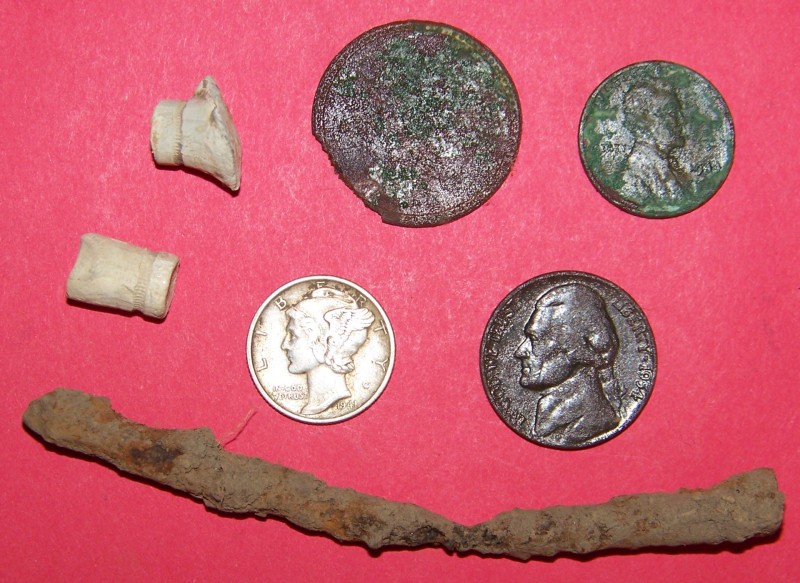
-
 Took a trip to Nevada last week and met up with Steve and Steve. While I waited for them to show up at our meeting place I got out a few VLF metal detectors to try on some gold nuggets. Nothing conclusive here just though people would like to see how they perform. One difference between the Nevada soil and what I'm used to hunting is all the salt. All the detectors were subject to coil knock and really took some fine tuning to get them to run stable. Steve F later found that on the Deus 2 sensitive would probably be the best mode to run as it eliminates coil knock issues and is still pretty sensitive to small targets.
 -
 Has anyone seen or heard how well the Legend does on gold nuggets as compared to the 800 or the ORX. I've been looking around the net but haven't really found anything yet. Thanks, Jim
 -
I just happened to notice that both Equinox models went up another $50, from $949 to $999 for the 800. That makes a $100 price increase since it was launched at $899. I saw the first price hike as possibly a little opportunism, taking advantage of the popularity of the model, and lack of competition. This one I assume is related to the price increase and super high demand for chips. Garrett also raised their prices. Still, this would seem an inopportune time to raise prices. The Legend at $635 so far seems to be running neck and neck with the Equinox 800 performance wise, but with a higher build integrity. There are an awful lot of people talking about selling the Equinox they already have to buy a Legend. Prospective buyers now also have to consider a $364 price difference on top of it. The Equinox 600 now sits at $699, still $64 more than a Legend with less features and the same build quality concerns. Gas prices are up, inflation is soaring, and the competition has caught up. Seems like it would’ve been a better decision to give up a little profit margin, not raise prices, particularly where the volume of future sales is now in doubt. Garrett’s decision is also puzzling in light of the Simplex. They have to be feeling it right in the AT. It would seem that if the Simplex wasn’t the final nail in that series, the Legend might be. The Equinox now also has competition from XP with the Deus II. Contact the right dealer and you could have a Deus II for as low as $1450-$1500. Buy an Equinox 800 at $1000 and you may have to invest another couple hundred to address build issues. The actual difference between the two may be less than it first appears, for a machine with 6 times the underwater depth rating, also so far running neck and neck performance wise, and at times with a notable advantage. That’s my take anyway. It just seems like bad business to make a key product less attractive by raising the price with no change or improvement to known issues.
-
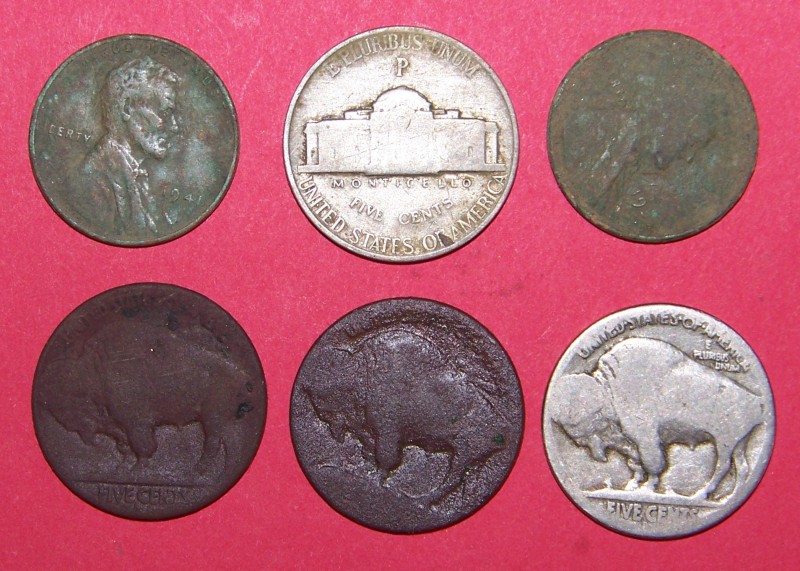
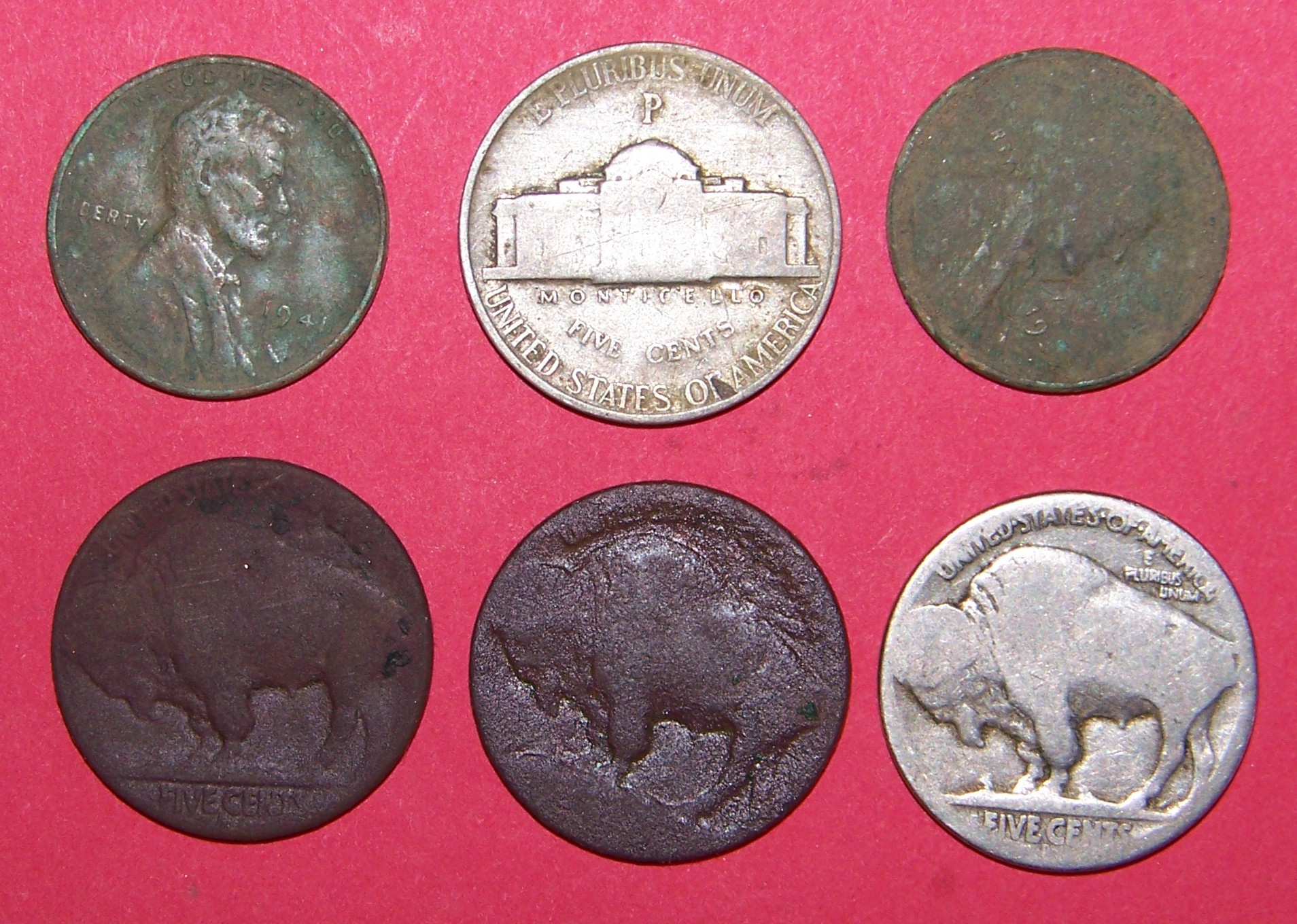
I've been lucky the past couple years with January and February weather nice enough to detect. Not this year, though. We didn't have much snow those months, but as soon as the rain stopped the ground refroze. March has been much nicer and I've gotten out half a dozen times. The first several hunts were either for trying different detectors or just cleaning up my "Wheatfield" site (muni park) that produced well last year. My standard New Year's resolution is to find new potentially producing sites so finally this week I got to one of those. It didn't disappoint. This is another public park and (as always) I assumed it had been hit hard, like most of the other parks I've detected. First thing out of the box I noticed that I was picking up ground noise. Typically around here I ground balance the ML Equinox (11" coil, Park 1) around 30 plus or minus 5. After hearing the ground noise I ran an auto GB sequence and it settled at ~7! No problem, though, nice and quiet. I settled in on a gain of 23 and left my other favorite settings (5 custom tones, Recovery Speed = 4, Iron Bias F2 = 0) alone. I had viewed HistoricAerials' photos and had a decent idea of what the park looked like back in the 50's and 60's (oldest photo there was from 1955). That helped me decide what ground may have been minimally reworked since those last days of dropping silver coins. I did my usual first hunt surveying -- not trying to mow every inch but wandering around looking for sweetspots. After a few modern coins, about 30 minutes in I got my first oldie -- a Wheat cent. Already I knew I'd found a good detecting site. Within another 30 minutes I get Wheatie #2, and within the next hour a Buffalo nickel. These early finds were in an area about 10 m by 40 m. I recalled from the aerial photos that a current sports field was present at least back to 1962 and by comparing the old photos to newer ones it appeared things hadn't changed much in that part of the park so I wandered over there. Bonus: one building obviously had a concession stand. The ground around it had been covered with crushed stone so people wouldn't be walking in mud after rains. I immediately got a copper Memorial cent about 2 inches deep. Again surveying, maybe 10 meters away I received a good but strong (i.e. likely shallow) 5 cent dTID of 12-13 and an inch or so down, out popped a silver Warnick! Here's a photo of the loot: I'll explain the bottom row in a bit (only the central Buffie was found in this hunt). The two Wheaties were dated 1941 and 1937 (no mintmarks). The Warnick is the most common date+mm -- 1943-P. What surprised me about it, besides how shallow it was, is that its color is consistent with circulated (but never spending time in the ground) examples of which I have at least 150 in my collection. It has a not particularly attractive gray cast which made them easier to spot and remove from circulation back in the late 60's and early 70's when silver started going up in value. All others I've pulled from the ground have been 'cleaned' by some ground chemical (acid, possibly) and look much whiter, similar in color to 90% silver coins. Its depth is reflective of the material of the ground -- crushed stone. In my area most overburden is from decayed vegetation (especially grass clippings). As long as they don't put down thick layers of fresh stone the targets aren't going to be very deep in that area around the sports fields. Finally, the last row. The central coin (view enhanced by coating with olive oil) is the dateless one I found in this hunt. On the left is a 1916-D I found late last year, also with an olive oil coating that is now evaporated somewhat. The coin on the right is dateless and not from the ground. Note the relative wear to the buffalo's back and head as well as the wear to the 'United States of America' across the top and 'E PLURIBUS UNUM'. The two on the left show similar wear, and in some ways (but not all), more wear than the undug example. But here's the big difference. Look at the lower slice, below the buffalo's hooves. The two outside coins have a recessed 'field' where the words 'FIVE CENTS' as well as the mintmark ('D' for Denver in both cases -- difficult to see in this photo) are protected from excessive wear. The first coins minted in 1913 didn't have that recessed area but rather the 'FIVE CENTS' and mintmarks stood out, away from much of the coin's detail. It was quickly realized that typical wear from circulation would obliterate these letters so the design was changed and the second type (exhitibed by the two outside coins here) was introduced late April 1913 and continued through the entire series, ending in 1938. Thus even though the nickel I found in this hunt no longer has a date, I know it's an early 1913. (I don't know which mint, though.) About 30 million of each type were minted in Philadelphia that year making that version very common. Both Denver mint (5.3 million with 'raised ground' & 4.2 million without) and San Francisco mint (2.1 million and 1.2 million respectively) are scarce and carry a premium value in decent condition (definitely not like mine!) with both type 2 issues from these branch mints carrying considerable numismatic value, especially the 'S' mintmarked Type 2. Even if I knew the mintmark on mine were an 'S', it would be worthless in this terrible condition. But it's fun to dream. 😁 I also found $3.90 face value of modern coins in this 3.5 hour hunt. Bottom line is that this park hasn't been hit that hard by detectors and there are more goodies awaiting!
-
just returned from AZon 21st March. I had my Euinox 800 and SDC2300 with me but decided to use my Nox 800 the most as i have many hours of experience on the machine. So the following setting worked very well (for me): Gold 2, Recovery speed at 6, Iron Bias 1+2 set to 0, ground tracking on (I was amazed that in different areas the ground balance would stay in the range between 1-3) blocking the number -10, -9 , -8 and + 11 + 12 +13 +14 as hotrocks were so plentiful. I was able to run the sensitivity at 22 all the time using the 6" coil. Many targets showed a wide range of ID numbers. When a single digit positive number +1 or +2 or so showed up once or twice checking the target I switched to all metal mode to reconfirm the positive number and dug it. This way I found a bunch of BBs and small lead screddings and 2 pieces VERY small pieces of gold specimen. Both together were reading at 0,03 grams. Both rang up with an ID of 1 loud and clear being so small. I just can’t believe it. If other machines will pick up gold smaller than that I would have to bring a microscope all the time.
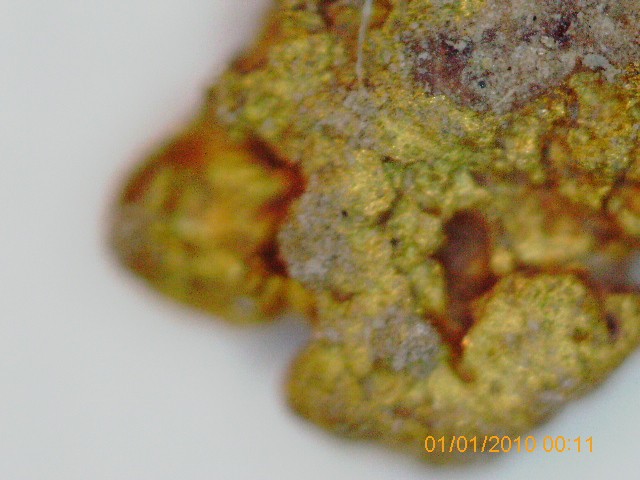

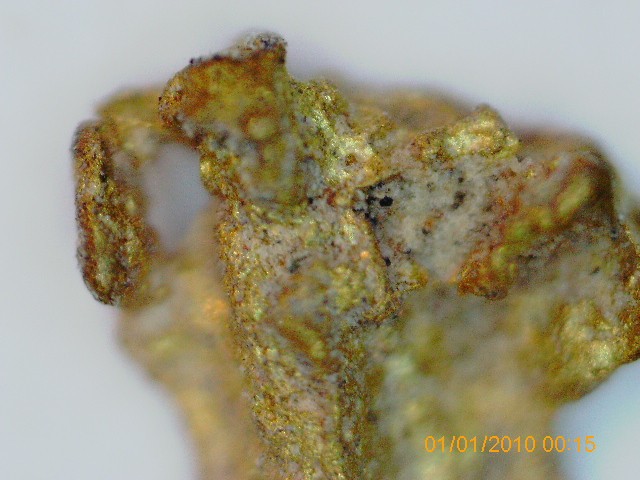
-
Here is my completed EQ800 on a carbon fiber shaft project finally done. Now all I have left to do is finish my waterproof connector.
.thumb.jpg.eb91f3c08edf3d68692ed79570866959.jpg)
.thumb.jpg.f64d669dbb522d40207cb174cf9ff619.jpg)
-
Hi, A distant acquaintance offers me a CTX 3030 for the price of a Nox 800. Having a Nox 800, I wanted to know if the CTX3030 might be of interest to me. I only practice in lands, woods, fields etc (never beach), I don't need its GPS function. In France, it is complicated to get feedback from this detector outside the beach. In short, is the CTX3030 better than the Nox800? Aside from its lower recovery speed. Should we wait for future releases of Minelab devices in 2022? Thanks.
-
I’ve got a deus1 and an equinox so I thought I’d play around and mimic the 3-D dime/Rusty nail test. I’ll say that’s a very interesting test to say the least. I used the X-35 9” & X-35 11x13” on the deus and the 6”, 5X10”, 11” and the 15” on the equinox. I tried bunches of different settings on both machines with all the different coils. What I found out was there’s a reason you do multiple directions when searching a location. My deus1 did hit the dime but the vdi numbers were from 04’s to 06’s in that area I couldn’t get a proper vdi no matter what I tried. The 9” coil on 25 kHz was the best. The 13” coil didn’t do as good but still hit it some. The equinox was able to hit the target and give a decent vdi (20-21) solid and repeatable. You would hear the high tone and then zero in on it. Here’s the surprising part or it was to me the 6” and the 5x10” would not hit the dime but the 11” and the 15” would. Both had the same vdi numbers that I stated above. The 11” had a slight edge when it came to zeroing in on the coin. I need to say getting a good four way hit with either machine was near impossible although there were enough good sounds going around the target to make you want to dig it. Today I went to an old park in town that has given up a lot of civil war relics and old coins. I started with the deus1 and 9” coil. I went to the toughest part and all I’ll say is modern trash mixed with iron is tough. I was hoping to find a target that had the very low vdi numbers and the iron tone beside it. That didn’t happen but I did dig a few targets that were mixed in with the junk but hunting in that type of ground conditions was very over whelming. I’m not sure how many sounds were on each swing but rat a tat tat tat rat a tat was what I listened to for that hour.🤪 I got the equinox out and hunted with the 5x10” for the remainder of the time I was there. (about another hour) I played mostly with the iron bias settings running it on zero and then adjusting it to see how it changed the sound. My conclusion today was that if I couldn’t tell for sure there were two targets there it was a false signal coming off the end of usually a rusty nail. In other words a good tone with no separation from the iron tone every target I dug today was iron. There had to be a separation for there to be two targets. I’m not sure how many targets I’d have to dig to maybe find a good target with the iron and good signal right together but I’m too old to dig that many holes and find out. lol Today was mostly just playing around and trying to possibly learn something. Anyways thanks for reading, good luck and HH! Tom
-
TOP MINELAB EQUINOX MISTAKES (I know ‘em, cause I’ve made ‘em...) 1/ Not using cross sweep to determine how consistent a signal is. This results in a lot of elongated targets that sound good in one direction getting dug up. 2/ Not using pinpoint to determine how solid, what size and shape a target is also iron wide / narrow. Pinpoint can also tell you when the machine is responding to part of a larger object—like wire. The machine’s high Gain causes you to dig too many “flyspecks.” 3/ Not using the depth meter to get an idea of target size and location in the strata. The depth meter can help to correlate the other information you are getting to give a better idea of where and what size a target is. 4/ Sensitivity too high (targets don’t stand out), or small surface targets dominate the signal. Target tones become clipped sounding, machine loses depth. 5/ Bias too low (targets don’t stand out), dig alloys. 6/ Recovery speed too fast, targets don’t stand out. 7/ Using a large coil with too much sensitivity—targets don’t stand out from the larger detection field. 8/ Using a large coil with the recovery speed too fast—machine does not have time to process the information from the larger detection field. 9/ Large coil, black sand or high saline, (or fast salt) sensitivity too high --less depth than stock coil. cjc
-
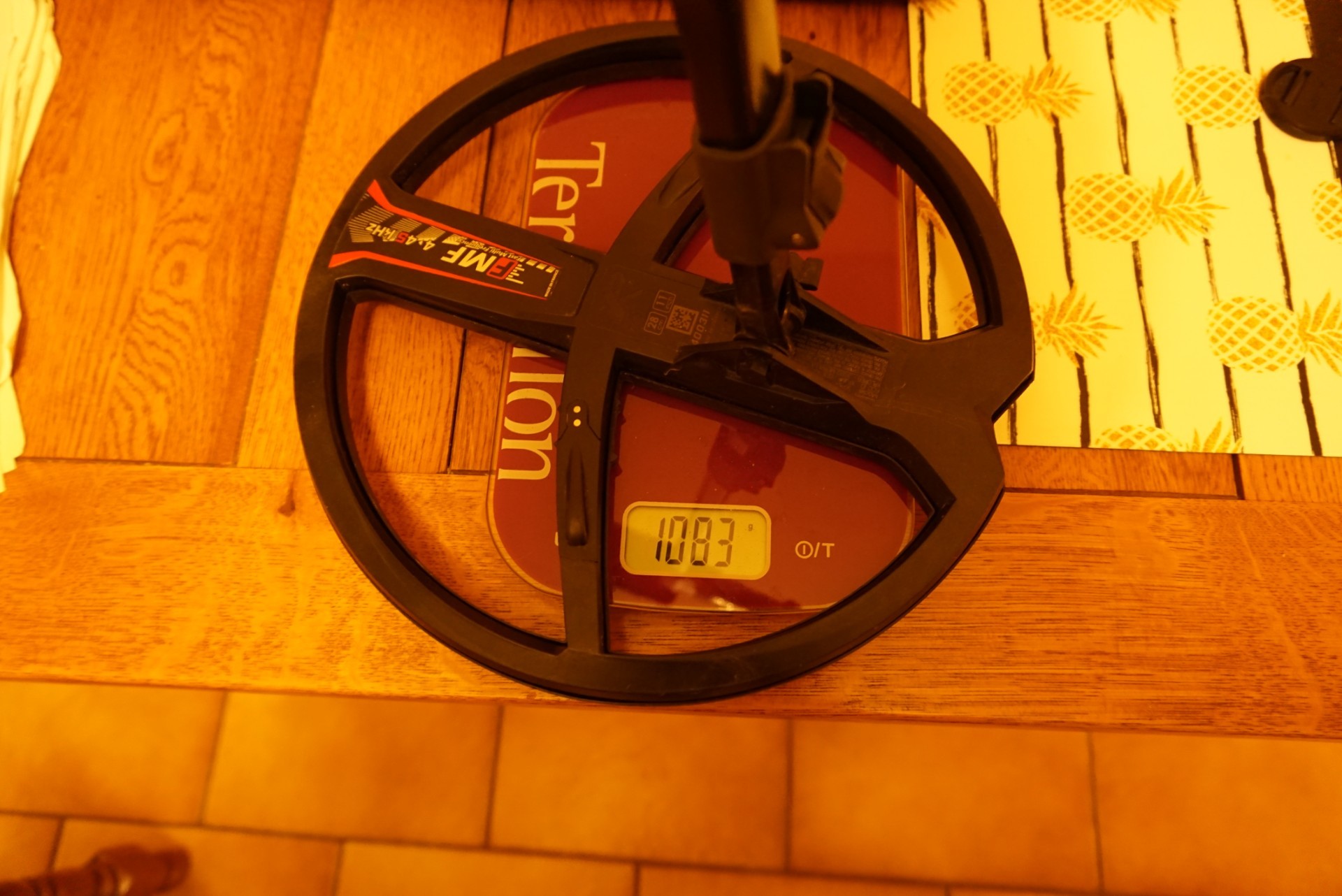
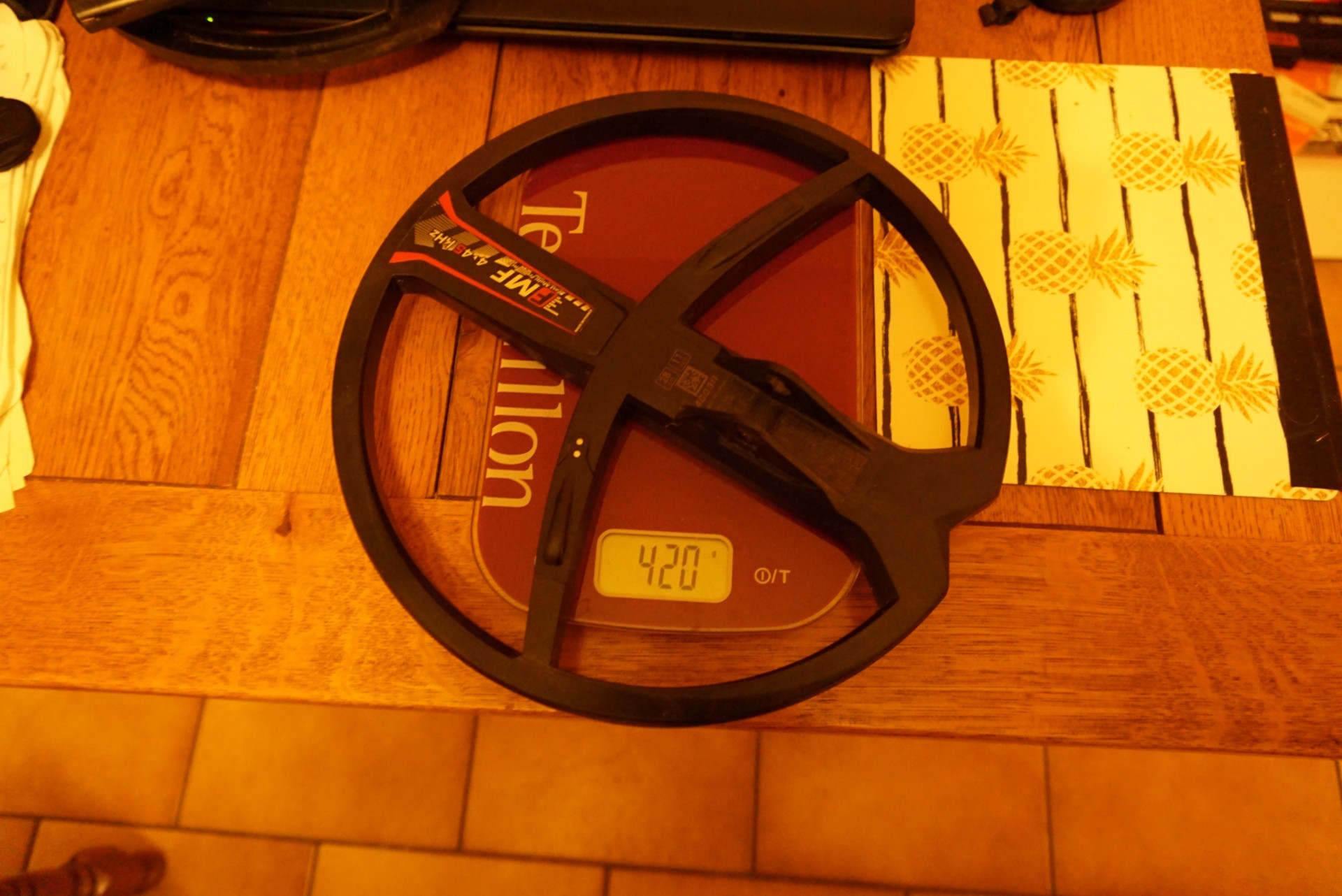
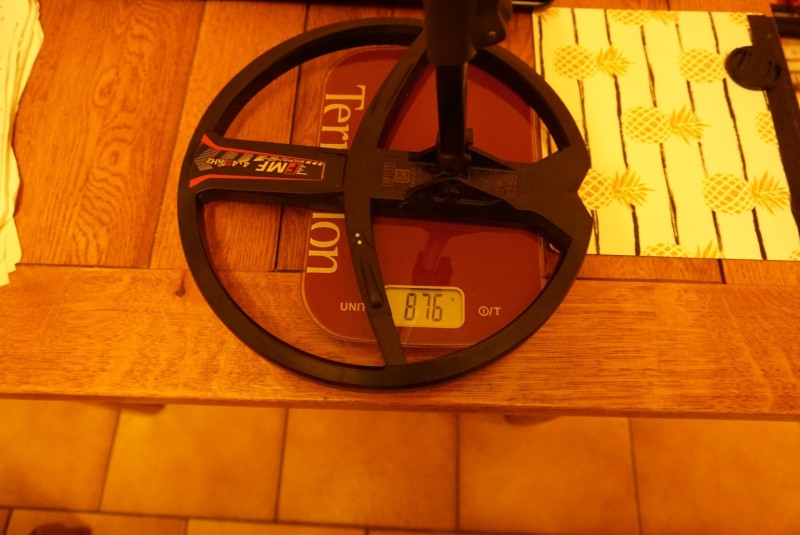
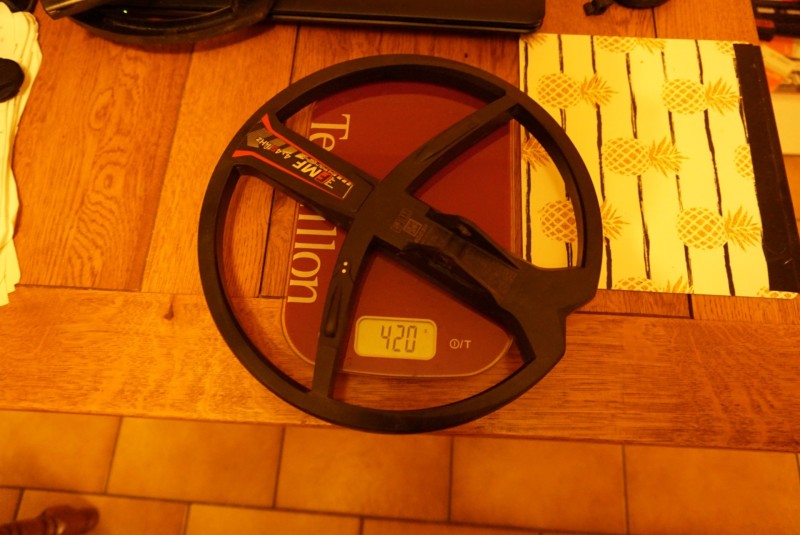
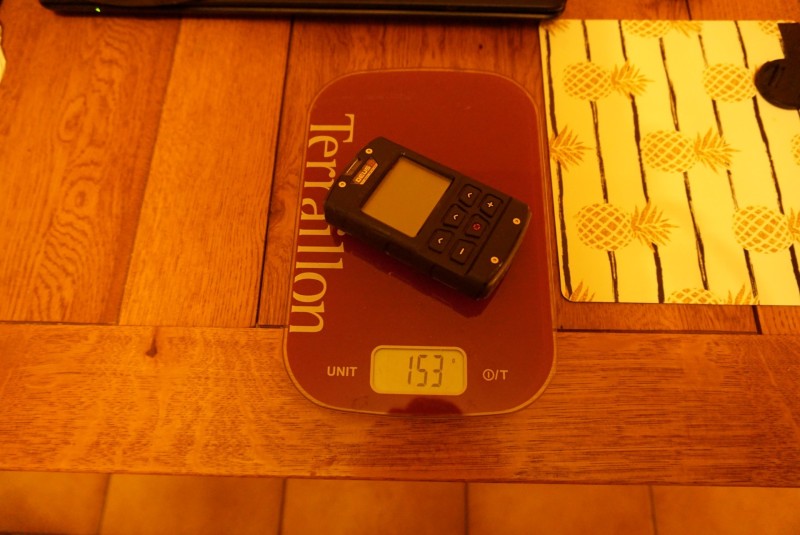
 I always weigh the detectors as an important part of my testing procedure . Here are the results : CC : coil cover RC : Deus2 wireless control box 1) DETECTORS WEIGHTS : --------------------------- - Deus2 9" , RC in the pocket without CC = 800g ( estimation based on NCtoad's post ) - Deus2 11" , RC in the pocket without CC = 880g - Deus2 11" , RC in the pocket + CC = 930g - Deus2 9" ,, RC on shaft without CC = 950g ( estimation based on NCtoad's post ) - Deus2 11" , RC on shaft without CC = 1030g - Equinox 11" without CC = 1260g - Legend 11" without CC = 1320g ( estimation based on cal_cobra's post ) - Deus2 9" , RC on shaft + CC = 990g ( see NCtoad's post ) - Deus2 11" , RC on shaf + CC = 1080g - Equinox 11" + CC = 1320g - Legend 11" + CC = 1370g ( see cal_cobra's post ) 2) PARTS WEIGHTS : ---------------------- - Coil without CC : - Deus2 9" = 330g ( see NCtoad's post ) - Deus2 11" = 420g - Equinox 11" = 420g - Legend 11" = ? - Coil with CC : - Deus2 9" = 370g ( see NCtoad's post ) - Deus2 11" = 470g - Equinox 11" = 470g - Legend 11" = ? - Control Box/RC : - Deus2 = 150g - Equinox = 320g estimation ( digital cb plus battery minus plastic handle) - Legend = ? A few pics : - Deus2 11" RC in the pocket without CC : - Deus2 11" + RC + CC : - Deus2 11" coil without CC : - Deus2 RC: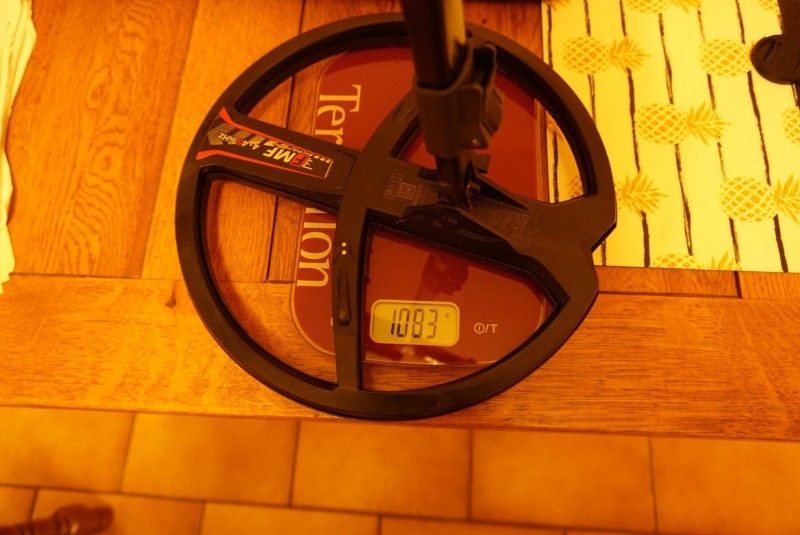
-
Jeff PM'd me and told me how bad the video was. I knew it was going to be bad with the EMI issue and I wanted people to see what reality is using the Deus 2 in the city. Out on my relic sites away from power lines, it is very quiet. I have a park about 3 miles from me that I can't even use the Equinox in unless I run the Sensitivity down to 18. I took the Deus 2 there a few days ago and I have to run the sensitivity down into the high 60's to get it quiet. For me and the soil I have, single frequency is really not an option. I literally get 4" on a dime with single frequency. You'll see in this next video the Deus 2 still gets about the same depth with the EMI under control. So a 6" dime with accurate ID is way better than the Deus 1 at 4" in my dirt.
-
I've held off posting a video like this because of all the controversy with Deus 2 vs Equinox thing. Now that other people are getting the Deus 2 and showing that it struggles in mineralized dirt just like all other VLF's I decided to go ahead and post the video. I've said this to a few other people privately and I thank them for their comments and input. I actually filmed this test in my test garden 3 times over the past week and a half, deleted all but the last just to make sure I had all the programs in the Deus 2 figured out. I've been out with the Deus 2 on 3 different hunts about 4 hours each and I'm seeing the same results as this test show in my soil. So if you have higher or lower mineralization this probably doesn't apply. I've used the Deus 1 for about 6 years, so I'm not new to how it operates and the Deus 2 is very similar to the Deus 1. Just today I went out to a relic site and confirmed what I'm seeing in the test garden when I compare signals Deus 2 vs Equinox. I'm personally not getting rid of the Equinox, the Deus and Equinox are still yin and yang IMO. The Deus 2 in my city has a real issue with EMI, more so than the Equinox. It's going to be tough using it in a park around here. Might just be the 11" coil, I hope. Looks like Paystreak has the same EMI issues with the 9" coil as well. Some may ask about the relic program because I don't show it in the video. I will say it hits the deeper targets, But the results are still the same as the other programs in the video 00 ID.
-
Sorry if this thread has been discussed before. (I did have a look around the forum but couldn't find a comparison between machines) I've decided to have ago at coin/relic hunting. When talking to a dealer that regularly detects I got the impression that the 3030 was still an all-round better machine than the equinox. The purchase price is not part of the decision, more so id like to purchase something I'm going to be happy to keep as i learn more about relic hunting. My wife and I regularly head off on short trips and would like to go to other areas other than the gold fields all the time. I'm thinking the ability to detect beaches/parks and old historic sites would be nice. Although I've often thought id love to have something that could go over old-timers gold camps and discriminate out the iron better than the gpx4500. So the question is what would most people get? The 3030 or the Equinox 800. Or would there be some other machine that would be worthy of consideration?
-
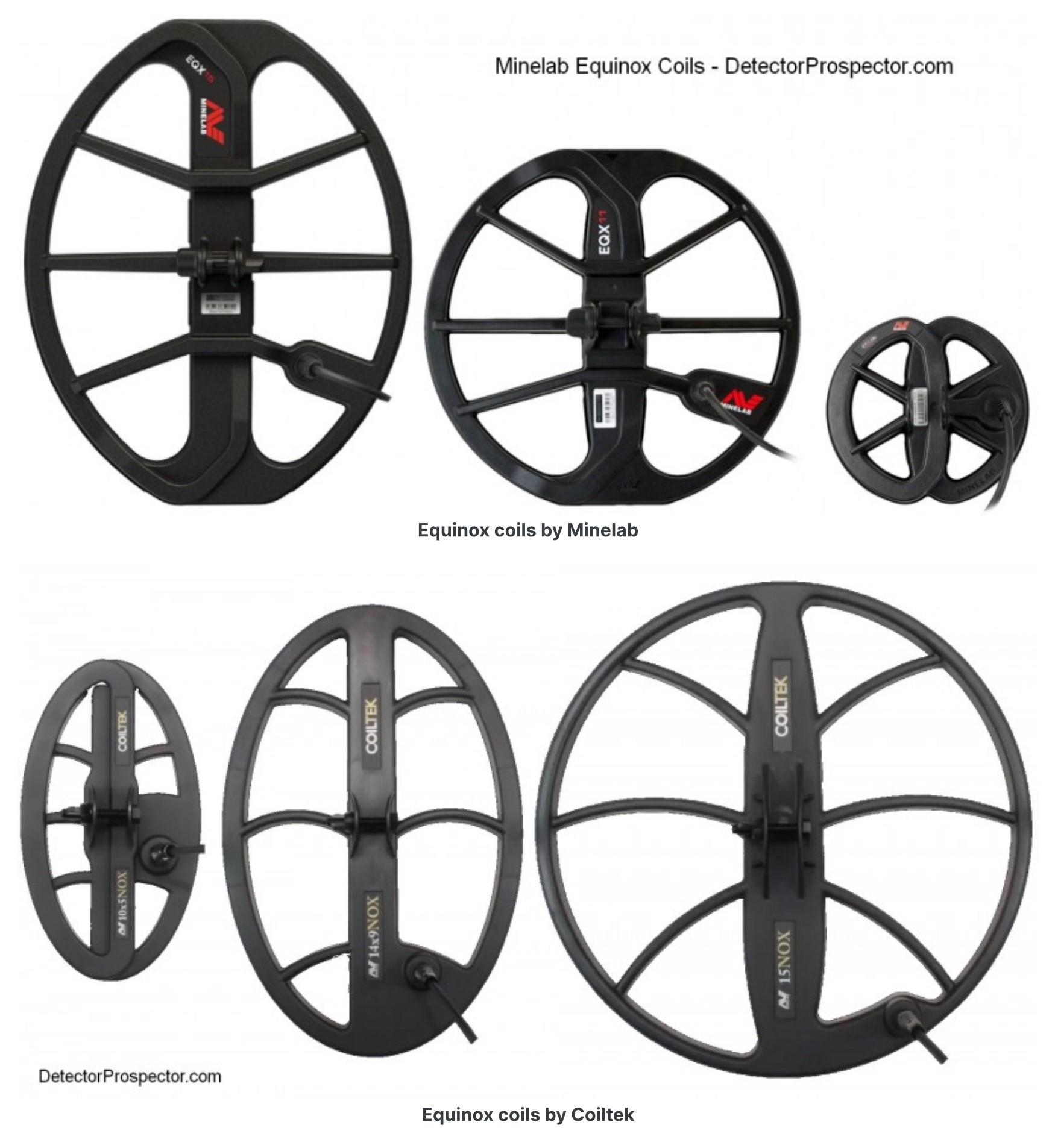
.thumb.jpg.95344db3aeef0a4c6c73420daa366191.jpg) I would like to find out how the 10 x 5 has worked out on the 800 to find gold and is it any better than the stock 11 inch coil. Since i have had so much bad weather and now rising creeks I have not had a chance to use anything yet. So if you have used the 10 x 5 on the 800 please let me know how you liked it.
I would like to find out how the 10 x 5 has worked out on the 800 to find gold and is it any better than the stock 11 inch coil. Since i have had so much bad weather and now rising creeks I have not had a chance to use anything yet. So if you have used the 10 x 5 on the 800 please let me know how you liked it. -
New to this so hello everyone😁 On my Nox 800 I detect in field 2 iron bias f1. Sensitivity 23 I detect with discrimination on until I find a target of jumpy I hit horseshoe to see if it registers iron trouble is it does everywhere with every swing even away from target it's done this since I've had detector (6 months)on every field. I nearly didn't dig a silver coin yesterday makes me wonder how many good things I've not dug. Hope someone can help. Thanks Croc
-
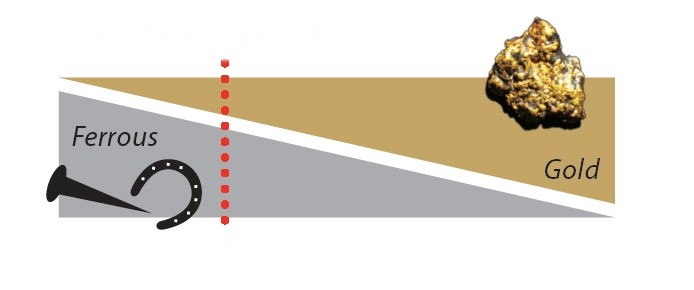
Jeff and I had a couple PM messages back and forth about Iron Bias, and what it does. Jeff made mention he thought it took items with mixed ferrous and non-ferrous responses and reduced or eliminated the non-ferrous response, leaving only the ferrous response. I usually set Iron Bias to 0 unless I forget and leave it at some default setting. I hunt full tones and between high 39 spikes and audio "tells" while in full tones I generally do not have much issue with ferrous tricking me, and so it has not been anything I have investigated much. The bottom line is I was feeling vague on exactly how this control acts in practice. As we all know bottle caps with the normal FE settings had a habit of reading in the mid-teens near 13. I have also run into issues with large flakes of decomposed steel cans in old mining camps that read in the teens. I'm not worried too much about bottle caps, but in some old camps that rotted tin can debris can really mess an area up. Minelab introduced the new FE2 setting that allows for more range on the control. Jeff's message made me wonder - is Iron Bias reducing the non-ferrous false signals, or increasing the ferrous signal? This short video shows the problems and the solution, and answers this question. I start with a piece of tin steel that gives a non-ferrous reading around 15 in normal FE mode, and show that from FE0 to FE9 the target gives a clean mid-tone with no ferrous report of consequence. The old FE setting was ineffective on this stuff. Then I go to FE2 and show that increasing the setting rapidly shifts from a non-ferrous reading to a ferrous reading. At 0 it's clean non-ferrous. Just going up to 2 makes it a mixed ferrous and nonferrous reading, at 3 it's mostly ferrous with some high tone mixed in, and at higher settings it is a solid ferrous reading of -7. To me it looks simple. The control is variable, and a particular item can be adjusted to read solid non-ferrous, or to give mixed tones, or to read solid ferrous. It is not a matter of just decreasing the false signals. More like converting what were non-ferrous signals to ferrous signals in a continuous range. This all goes back to the ferrous versus non-ferrous range having a full overlap, and much like how you can use the tone break to decide what items near target id 0 read ferrous and which do not, the Iron Bias offers a secondary control that does the same with these problematic items. The part I do not show? There are good items that will do the same, and I need to try and find one. In theory there is a good item that will give a false ferrous if this setting is too high. Otherwise we would not need the control. Just set it to max and forget. So the real question here that I think remains is not about the ferrous. The control will clearly help with making ferrous items read ferrous. But what about the reverse? What non-ferrous items will be revealed by leaving this control at a low setting? I take it as a matter of faith these items exist and so I leave the control low at or near zero. But how common are they? Am I suffering needlessly? What are the risks of setting the control too high? Minimal risk, or high risk? The best way to find out may be to simply go detect, but take the time to double check items at the full FE2 setting of 9 to see how many might read ferrous when they are not. Be patient - it might take a minute for the video to start once you hit go. fe-v-fe2.mp4 If somebody could make a perfect ferrous/non-ferrous filter, then we would not need the control. Many casual detectorists don’t need it at all either. The reality is the setting is a trade off. Higher eliminates more ferrous, and also runs more risk of missing the desired non-ferrous. Conversely, lower settings reduce the risk of missing desired targets, but you dig more trash. So the question is pretty simple. Are you willing to let the engineer pick the best setting for you? Or would you like the ability to make that decision yourself? People hate digging trash, so I find presets to be too aggressive for me. I get very worried if I’m digging no ferrous at all. So I tend to set where I’m digging some, but not so much as to bother me. It gets me “iffy” finds others miss. This is a simplified example. Iron bias far right gets all gold, but you dig all the ferrous also. Far left eliminates all ferrous, but loses all gold. A typical factory setting as illustrated might eliminate most ferrous, but at what cost? It is interesting that the control is on,y available in multifrequency on the Equinox. The issue predates multifrequency, with variable bottle cap reject controls going back to analog detector days. It’s an issue inherent in the physics of the targets being detected. If anything this is a problem that was accentuated with the switch from concentric to DD coils. Concentric better separate flat ferrous targets than DD coils, so this was less an issue when concentric reigned supreme. The newest bottle caps are even worse also, being made of a much larger range of materials than the simple caps of old. It is not just bottle caps though, but decomposed flat roofing steel, old rusted can pieces, and more. Why ferrous items can read non-ferrous From Whites XLT manual (6.59 kHz single frequency): BOTTLECAP REJECT Adjusts how strongly the instrument rejects or breaks up on iron. Most starting programs use the minimum setting. As larger numbers are selected, more bias rejection against iron occurs. The advantage of higher BOTTLECAP REJECT settings is that in high-trash areas more decisive iron rejection occurs. Trash becomes easier to identify by the broken sounds they produce. The disadvantage of a high Bottlecap Rejection setting is if an iron target is close to a good metal, the high degree of bias against iron may cause the detector to cancel both responses. Another disadvantage is that all targets, iron and non-iron, tend to start sounding more broken at high levels of BOTTLECAP REJECT. The operator needs to fine tune BOTTLECAP REJECT according to their preferences and the conditions being searched. Note that according to White’s, setting this control too high can contribute to masking issues. It makes sense, as all we are doing is adjusting the tipping point on mixed target responses, and a ferrous target next to a non-ferrous target presents just that issue.









.jpg.d4af376174bae666f6991a08c87e6d3a.jpg)
.jpg.c7186a7c5192c542ef75f4e50ce7c134.jpg)